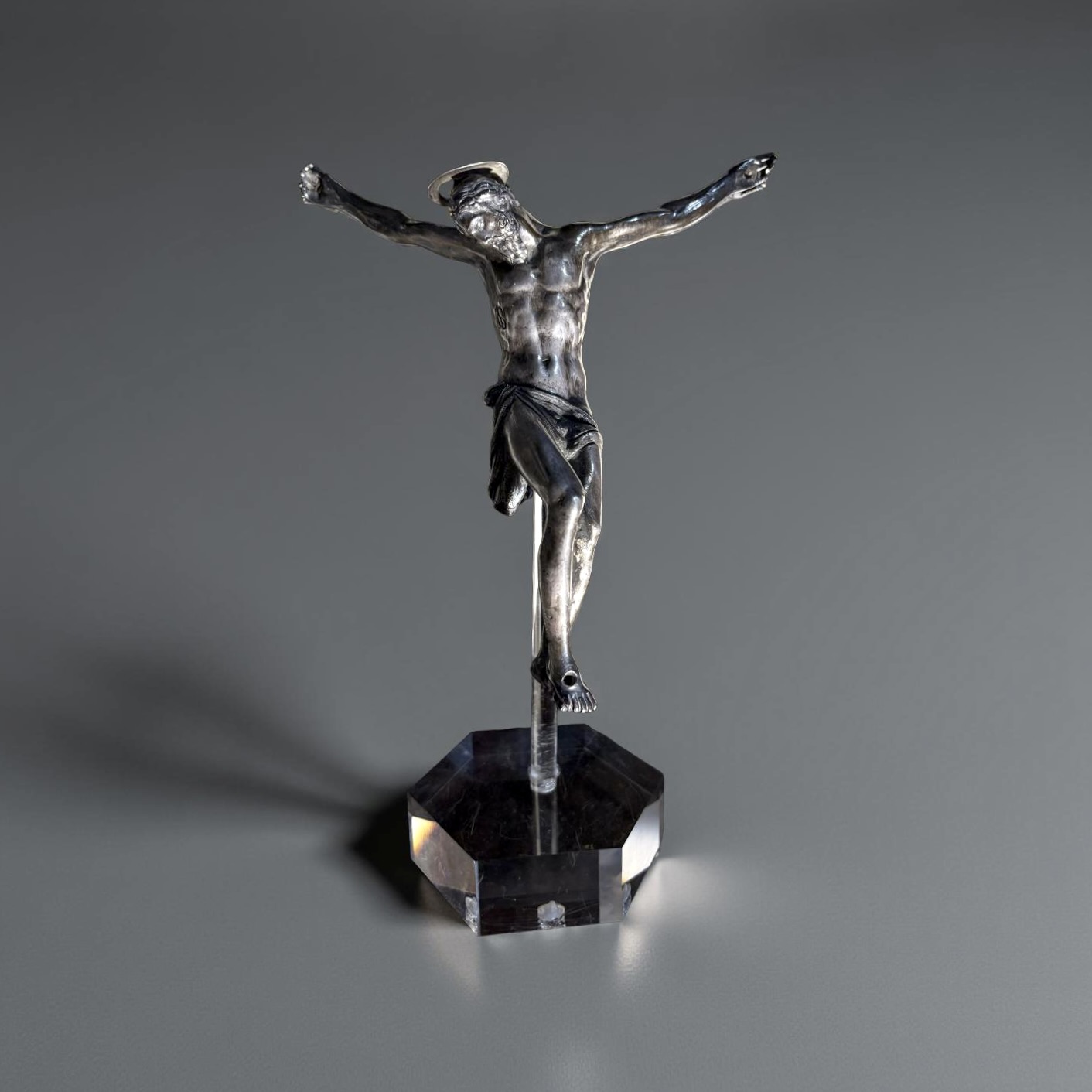
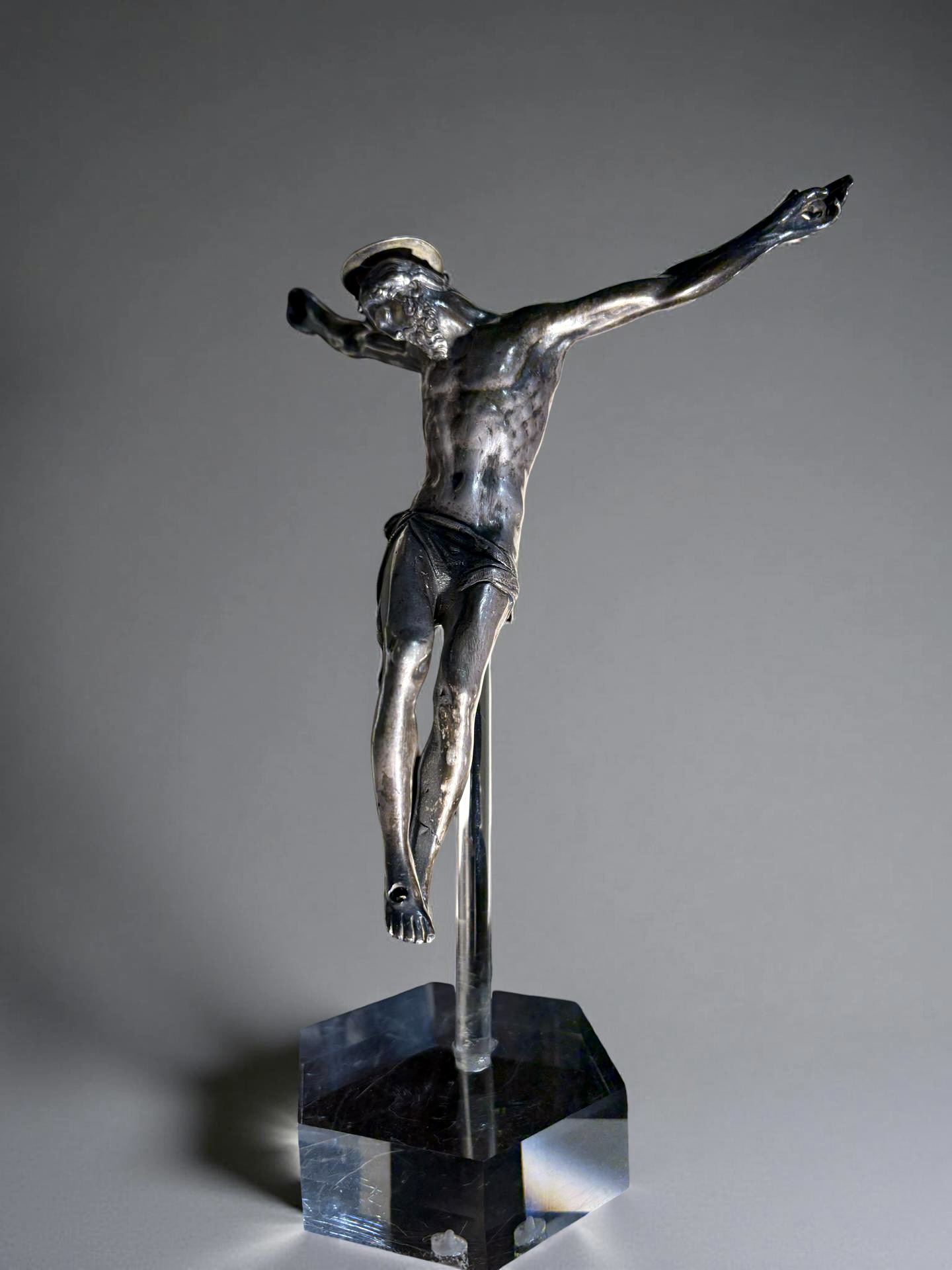
Early 17th Solid Silver Corpus Christi, Tuscan Workshop
€2,800.00
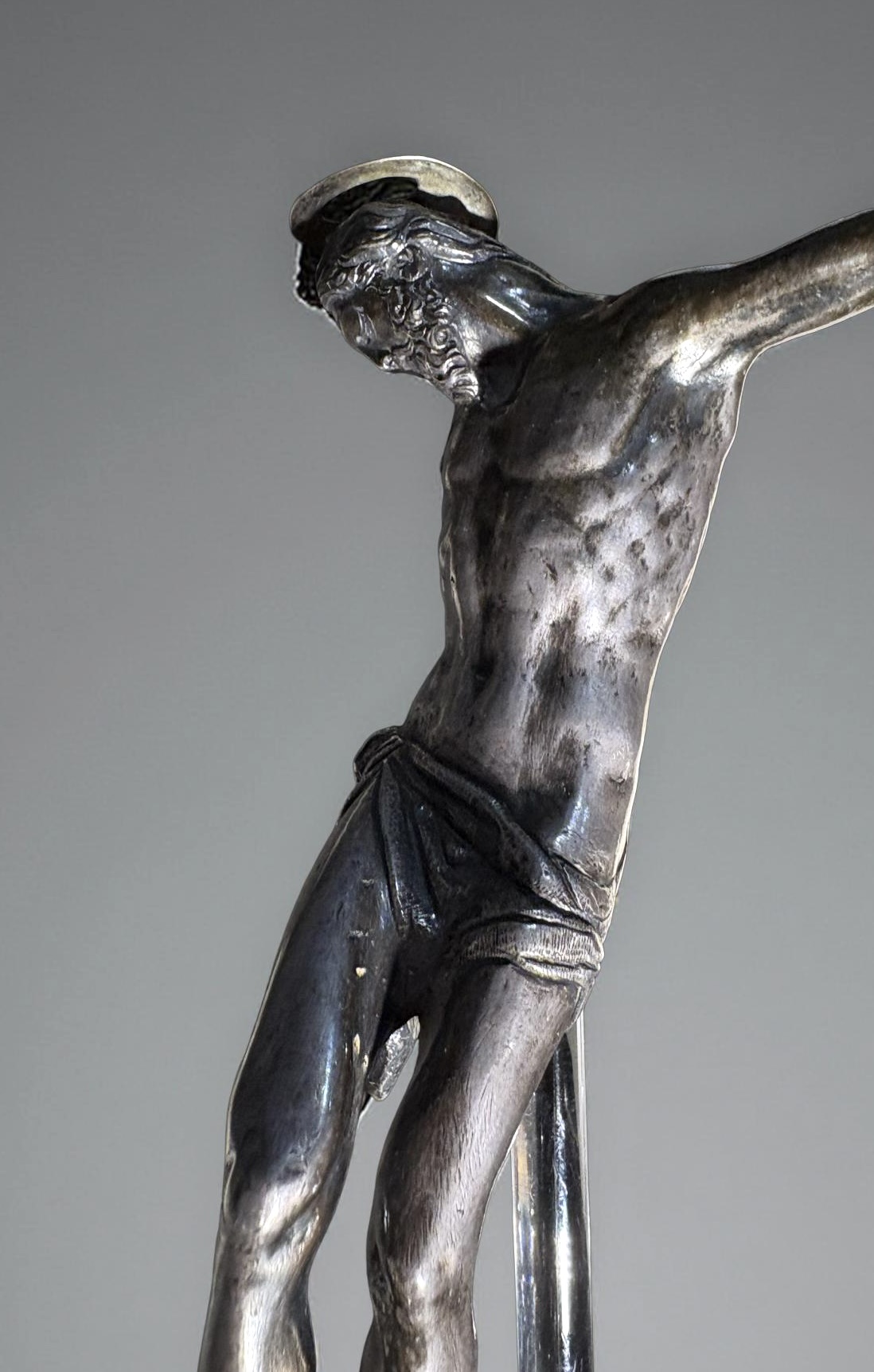
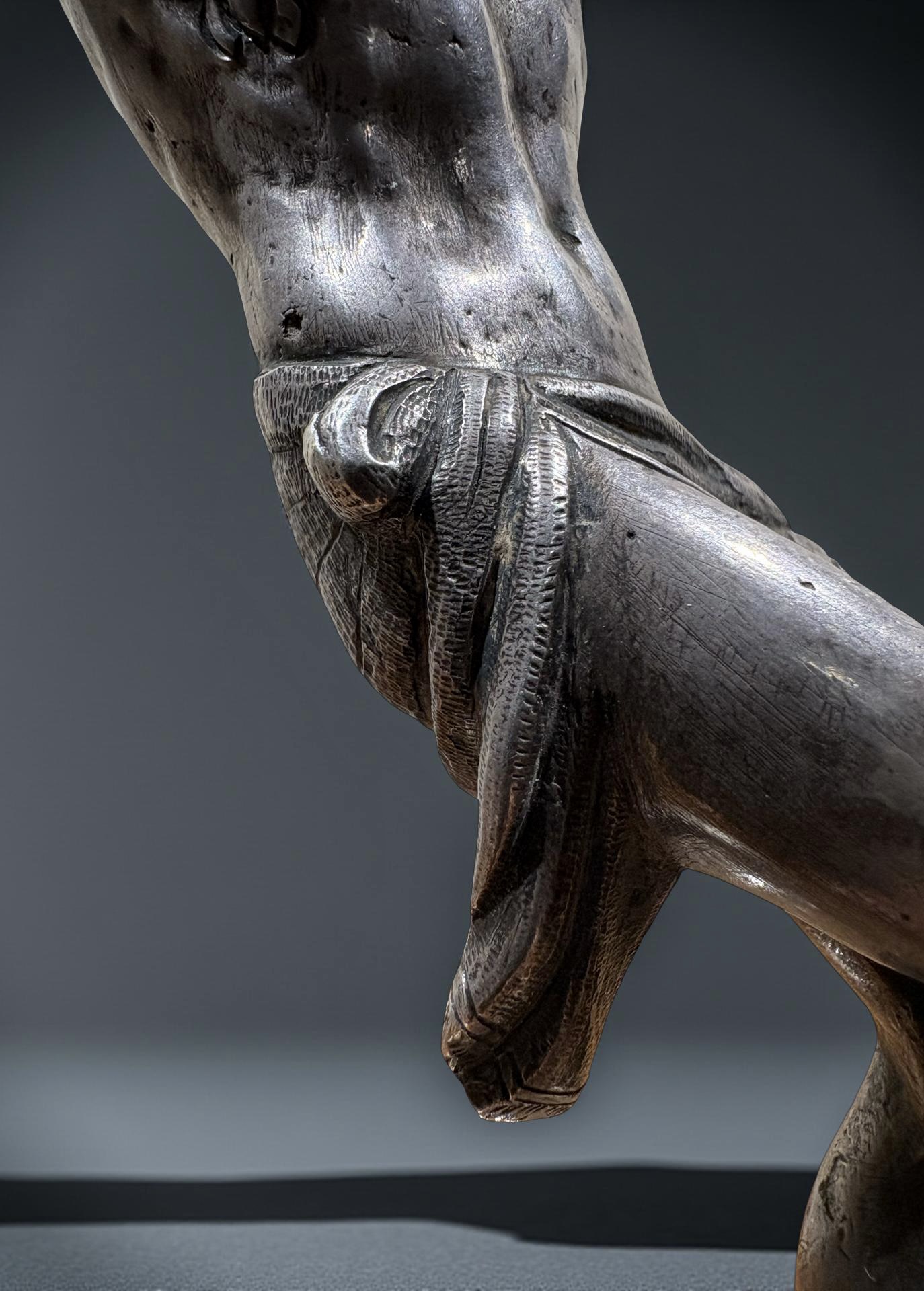
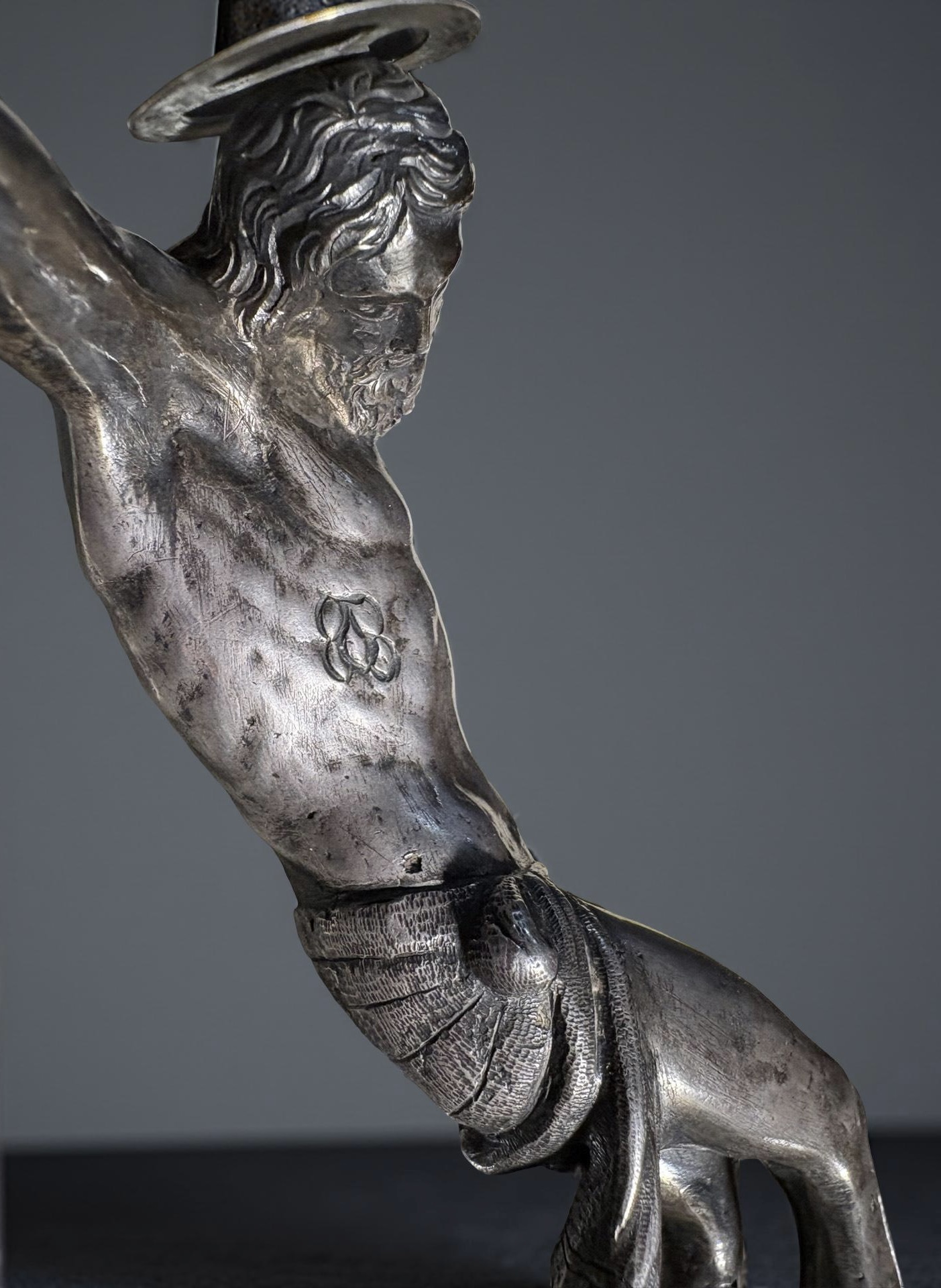
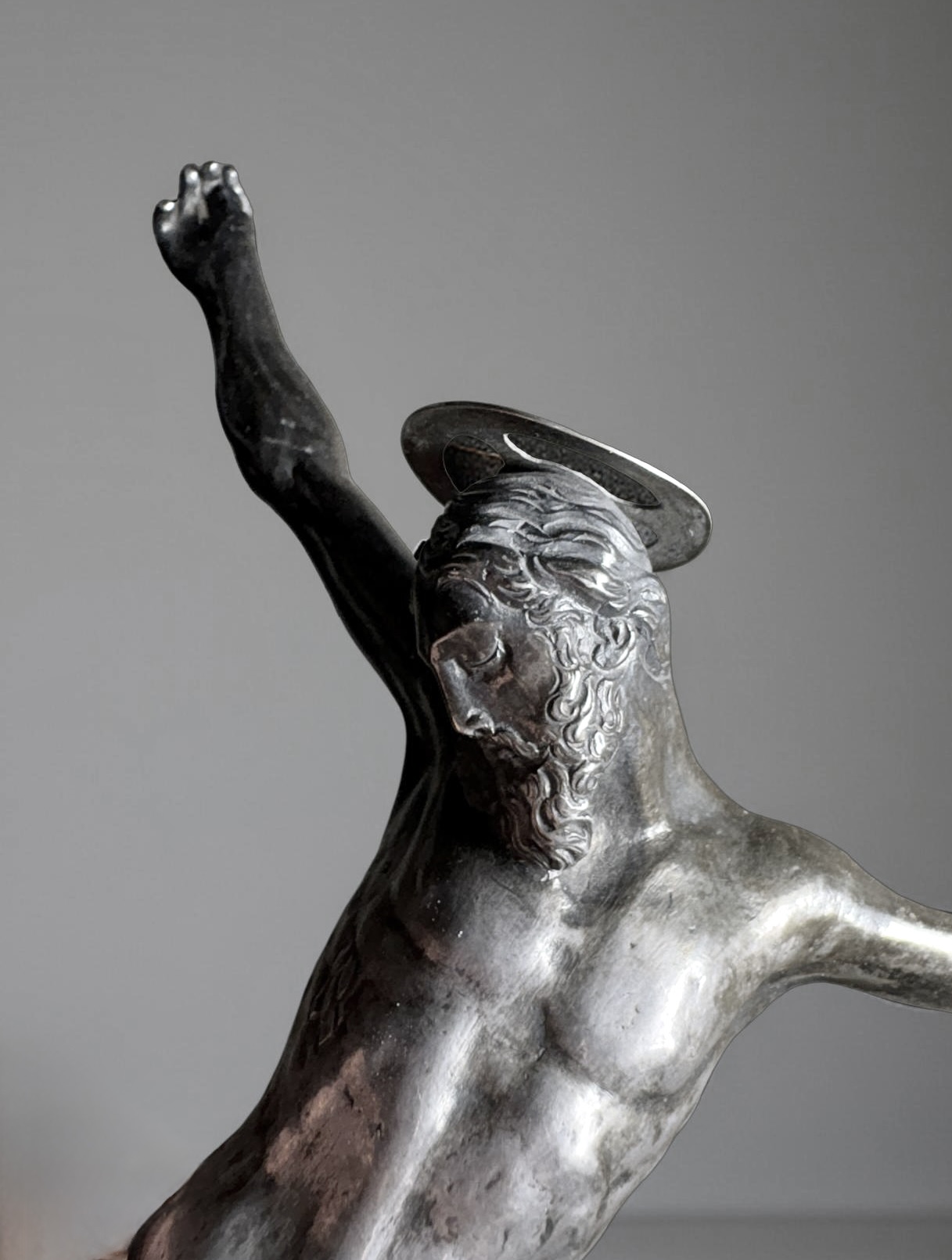
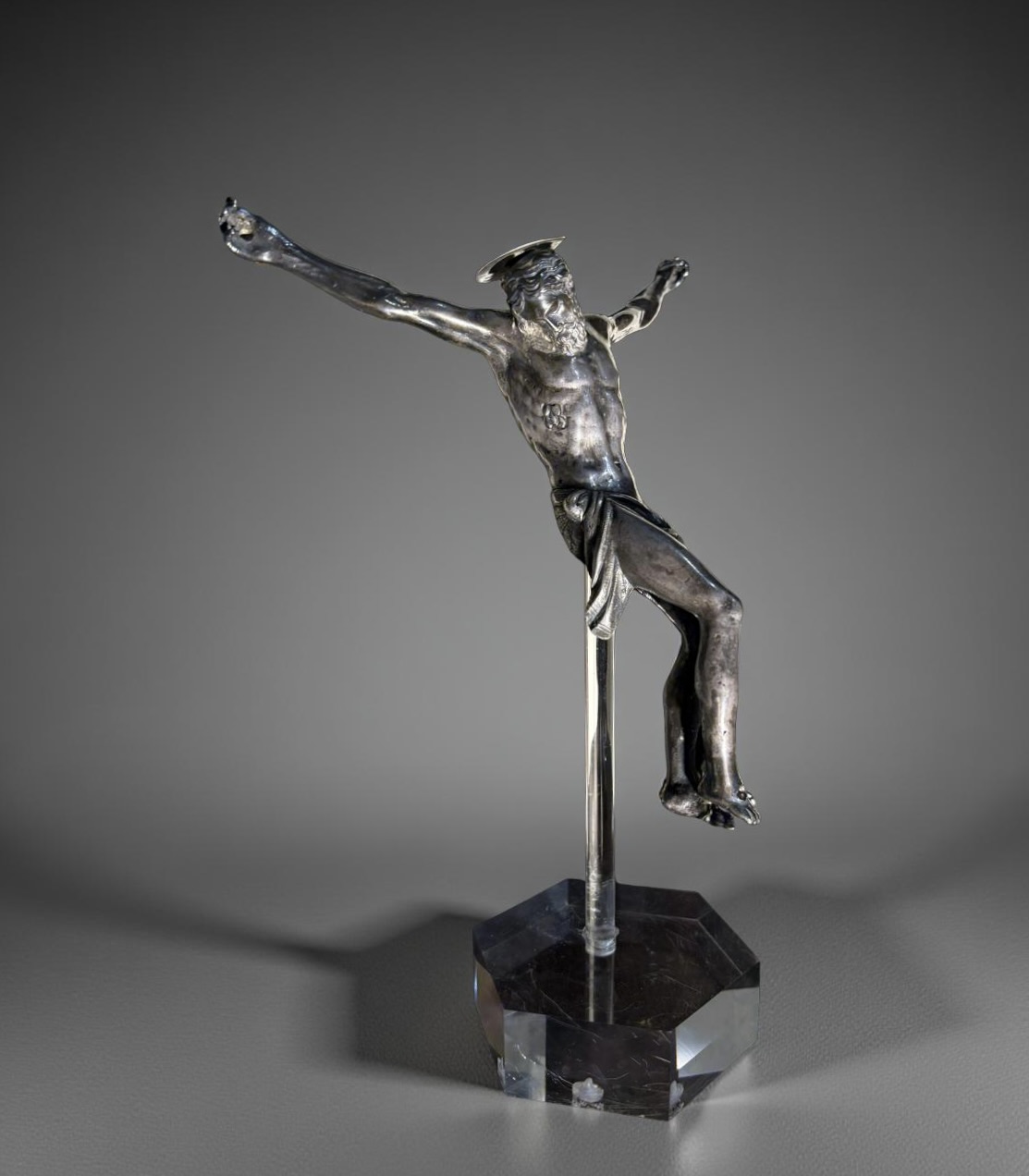
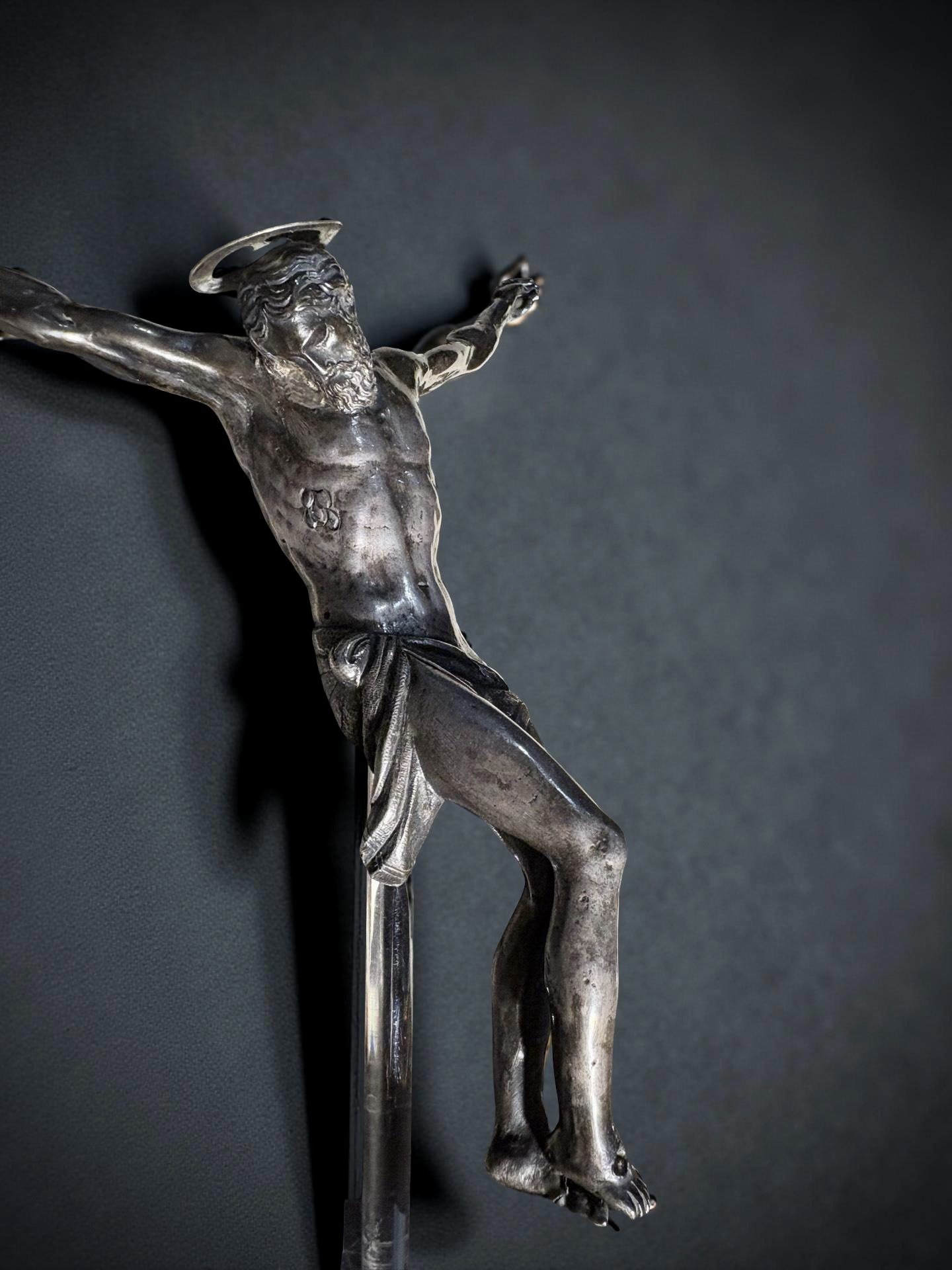
Solid silver Corpus Christi, Tuscan goldsmith’s workshop, first half of the 17th century.
The figure of Christ, created using the lost-wax method and expertly finished with chisels, belongs to the late Mannerist and early Baroque iconographic production typical of sculptors such as Giacomo della Porta (1532-1602) and Gian Bologna (1529-1608), and later, throughout the 17th and early 18th centuries, continued by artists such as Pietro Tacca (1577-1640), Antonio Susini (1585-1624), and many other Roman and Tuscan artists.
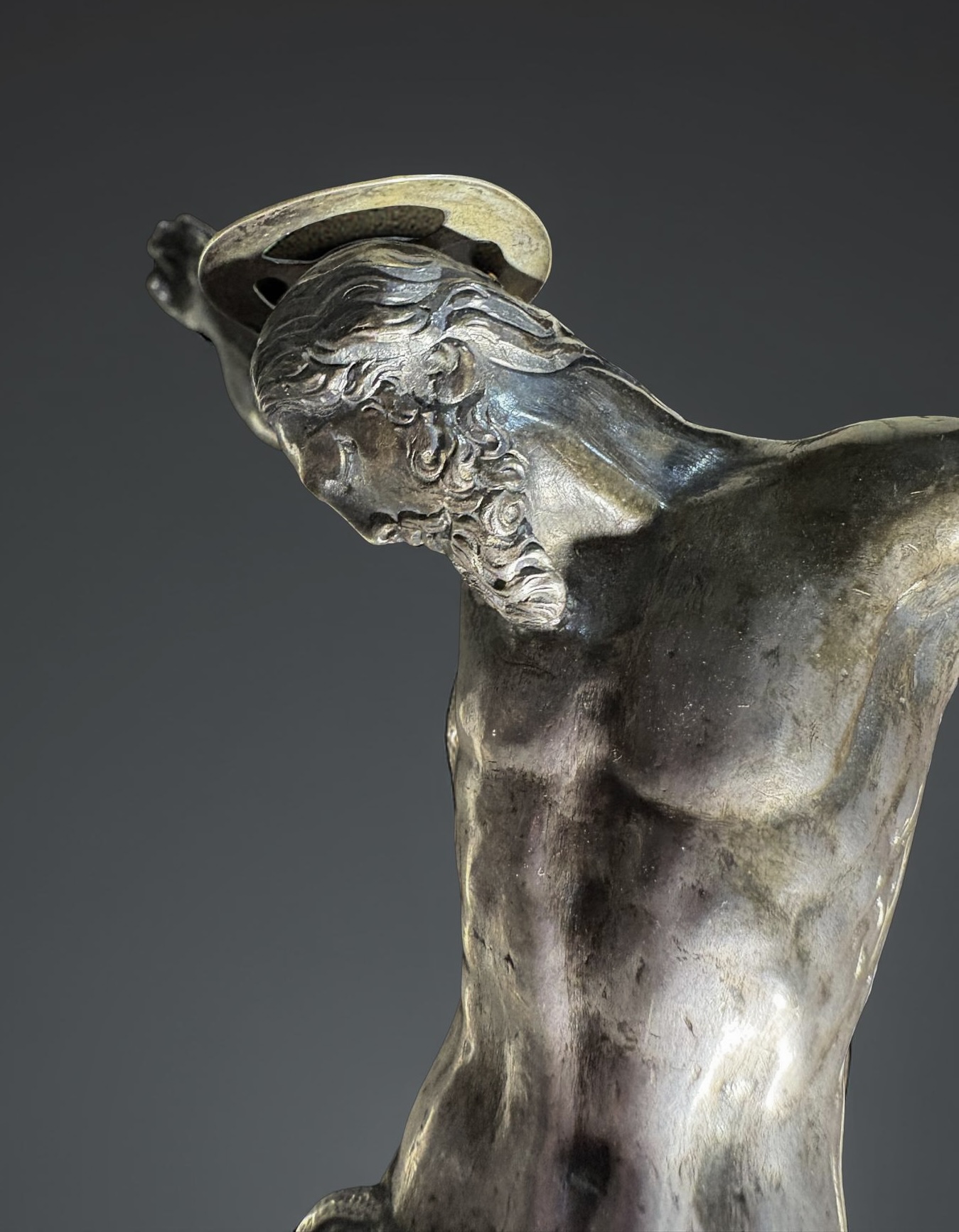
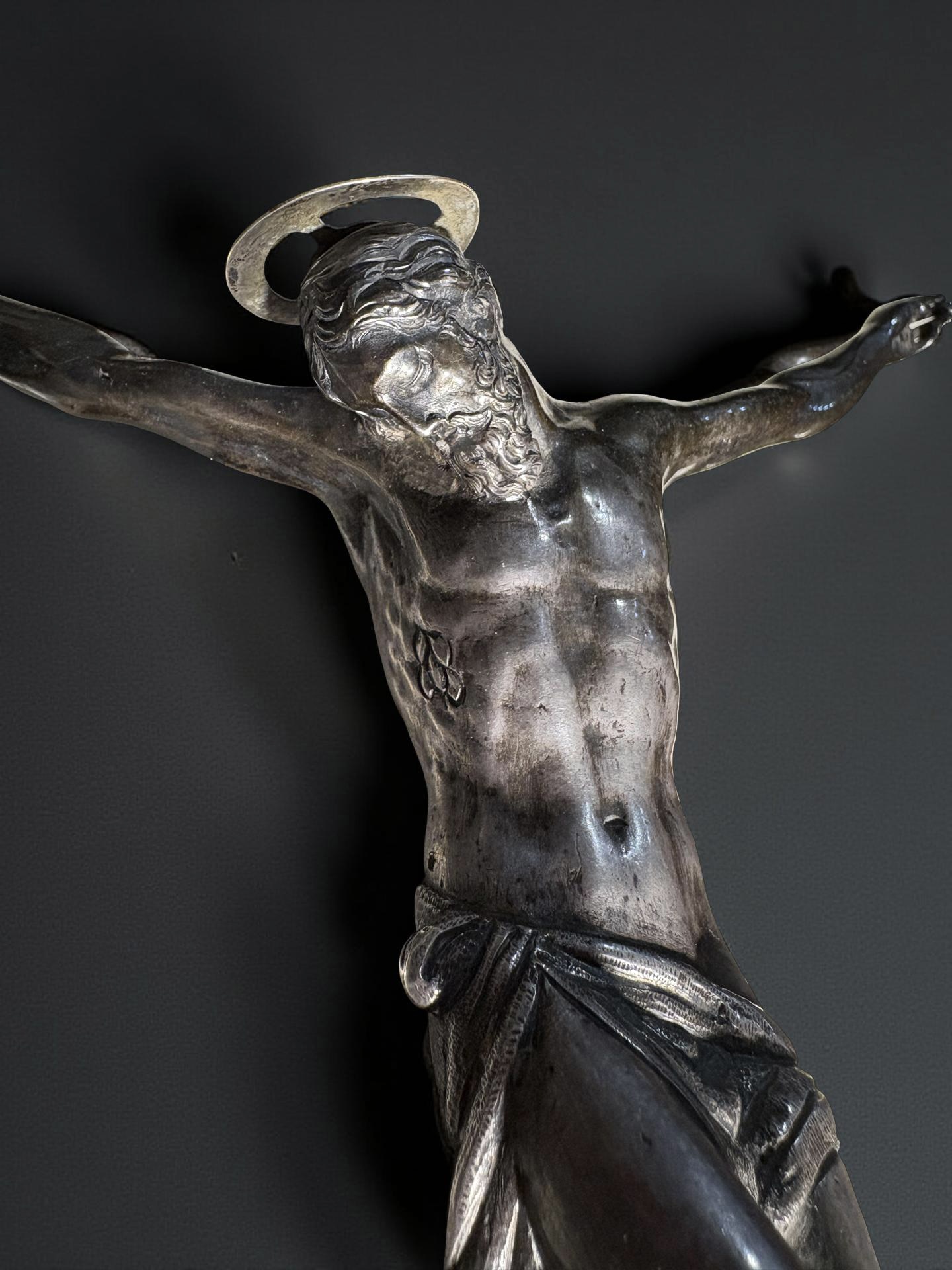
In particular, our Christ refers to the small silver Christ from the Holy House of Loreto, a famous silver crucifix model created by the workshop of Giambologna (Jean de Boulogne), dated around 1573. This became the prototype for a series of replicas in precious metals and bronze. Characterized by an anatomical elegance and a distinctive loincloth that set it apart from previous, more dramatic models, it became an icon of Mannerist sculpture and a prized object of private devotion and diplomatic gifts. The figure is that of a “patient” Christ, with slightly bent legs, crossed feet in internal rotation, a short loincloth tied at the right hip, and the head, almost in profile, tilted toward the right shoulder. The facial expression is calm, the anatomy is distinctive. The Silver Christ of Loreto is a key work by Giambologna and his school, an archetype of elegance and proportion that influenced religious sculpture in the late 16th and 17th centuries. Known both for the original and for its numerous and refined derivations, it established a new canon of beauty and balance. The invention is attributed to Giambologna, but the creation of many copies was entrusted to his skilled collaborators: from 1570, the Flemish artist’s studio was equipped for mass production, although naturally all the work was executed with extreme care by numerous skilled craftsmen. Numerous small-scale examples were mass-produced in both bronze and silver by Antonio Susini, with the help of other students, including, in 1581, Adrien de Fries. Several compositional variations are known, with further minor differences in detail, but none of the examples are signed.
Our Christ certainly belongs to the production of one of the Florentine goldsmith workshops associated with Giambologna and Antonio Susini.
The exceptional quality of the carving, the harmonious proportions, and the meticulous attention to detail leave no doubt.
Excellent condition, with minor signs of aging consistent with its age.
Dimensions
H 16 cm W 16 cm Weight 235 g
Description
Chiti Stefano, cultural heritage expert registered in the Register under number 195.
All the objects are accompanied by invoice and expertise.
I take care of all the customs formalities.
We use tailor-made wooden crate packaging.
Shipping via MBE with UPS, DHL or TNT couriers.
Payments accepted: bank transfer or credit card via X-PAY