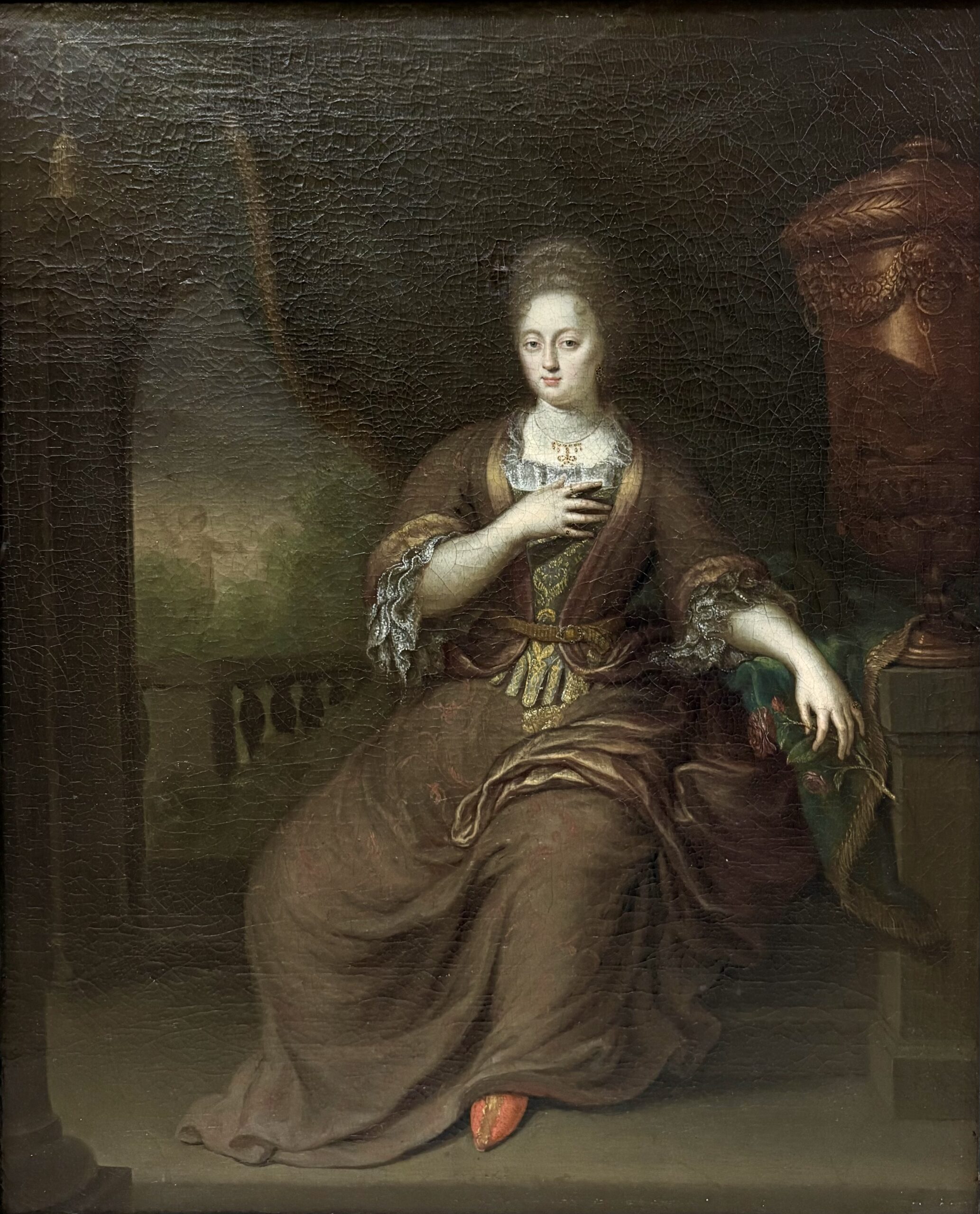
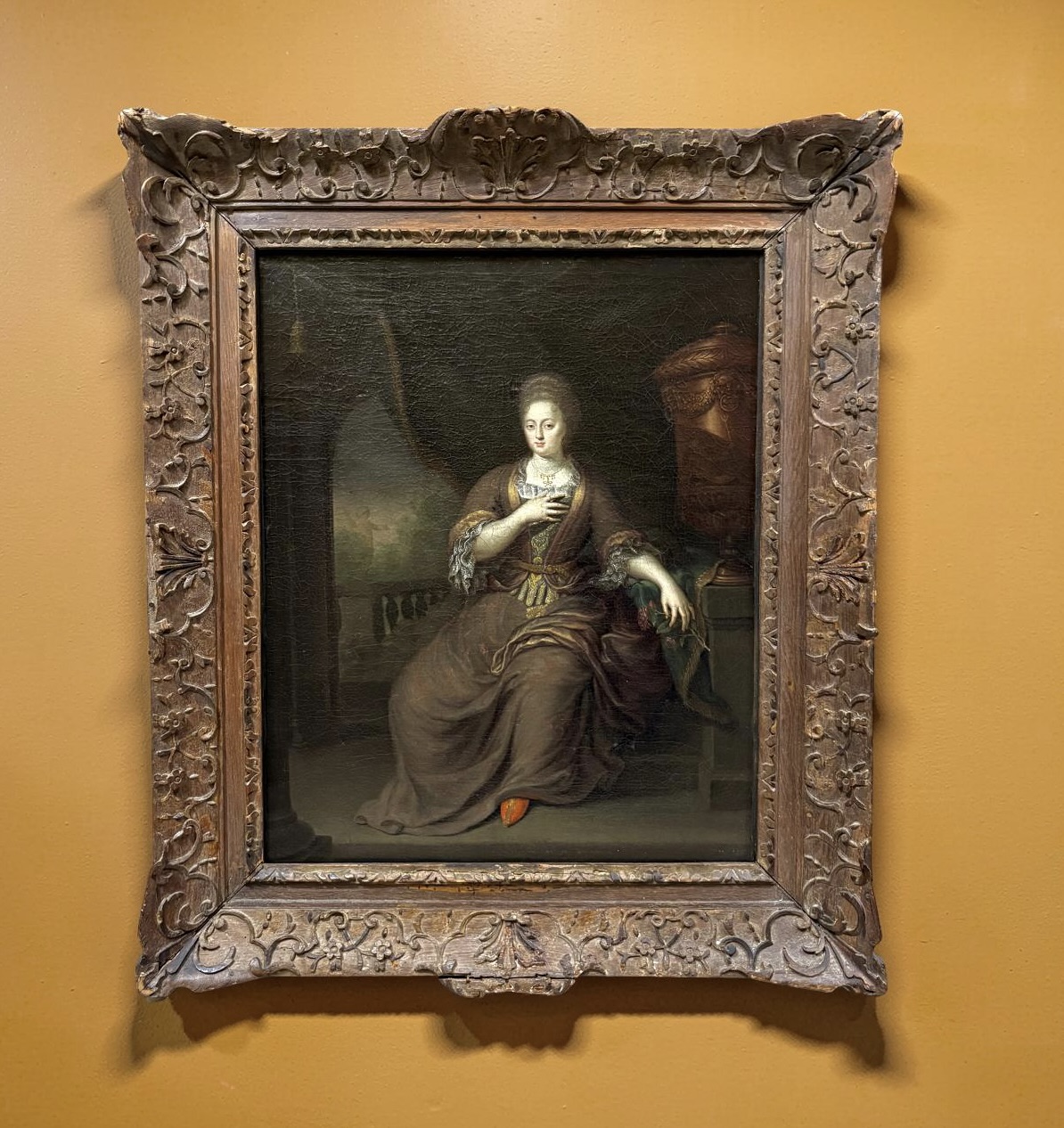
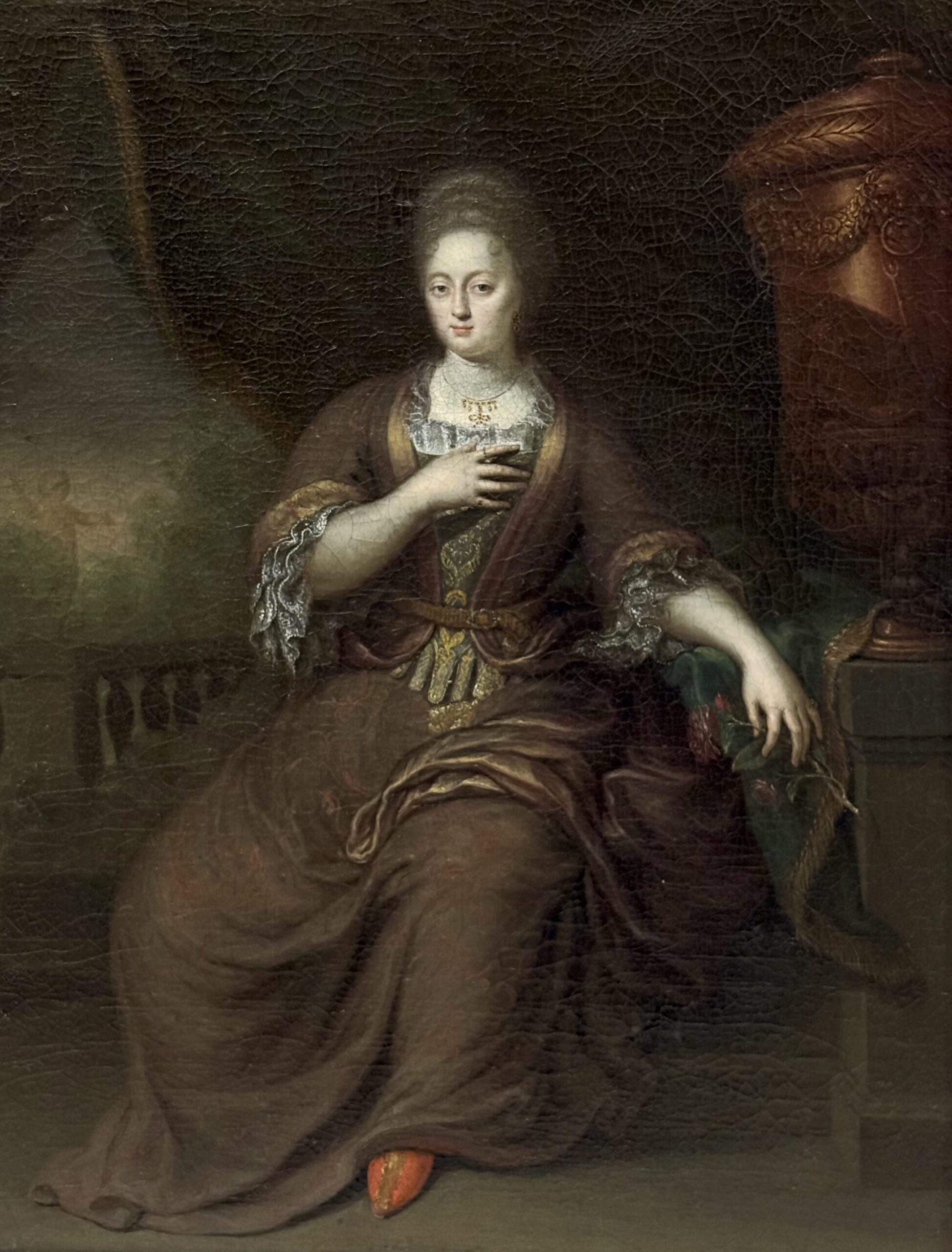
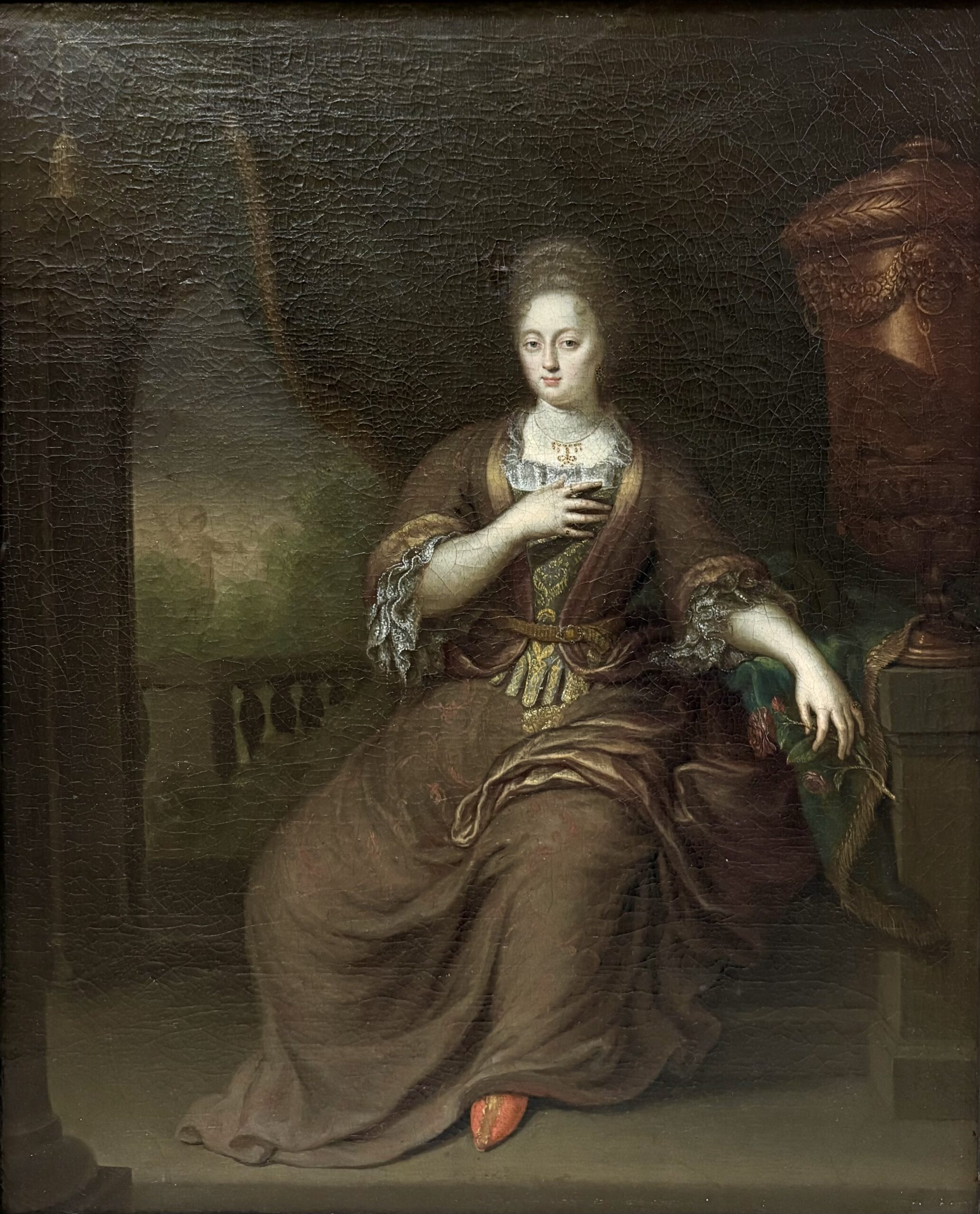
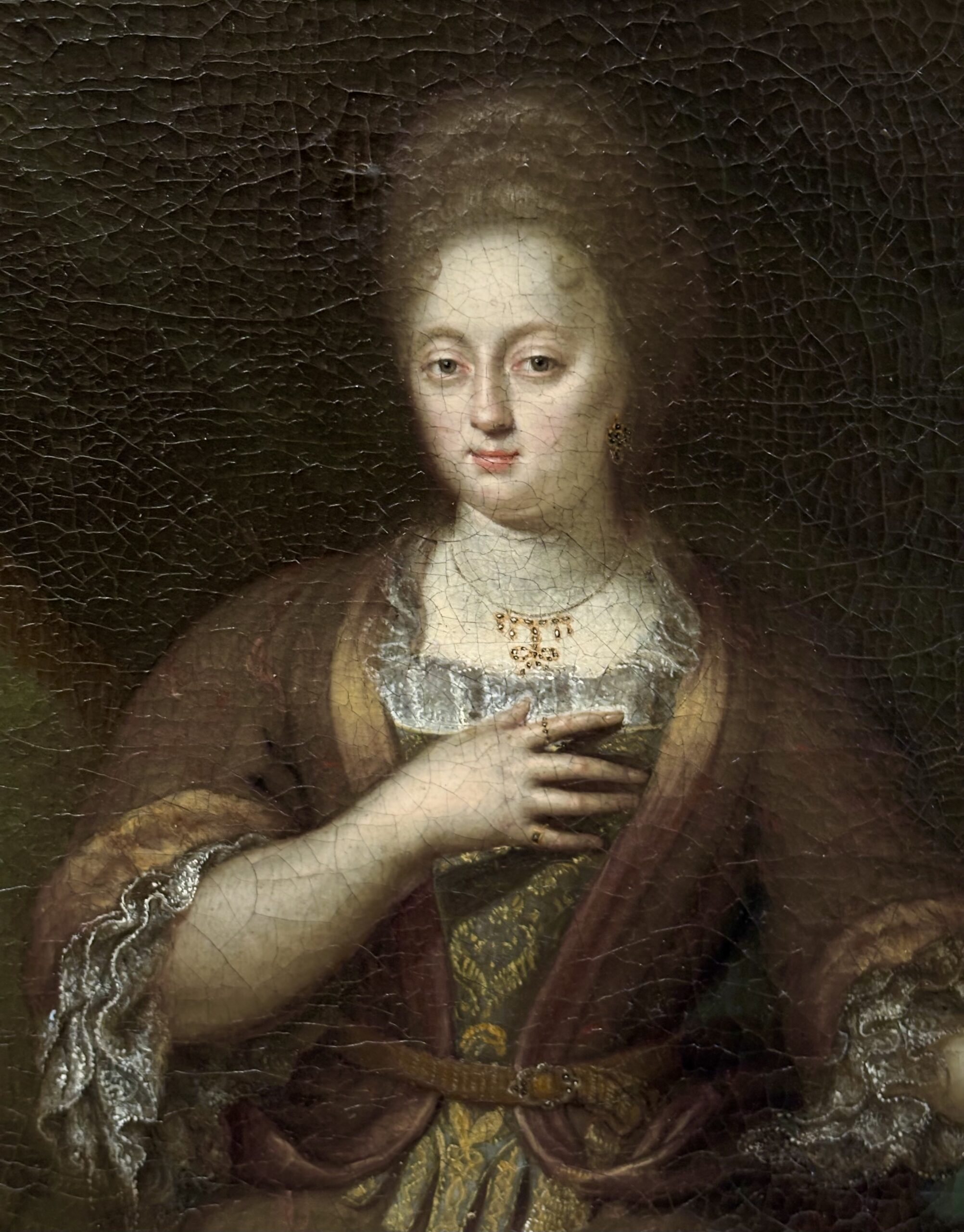
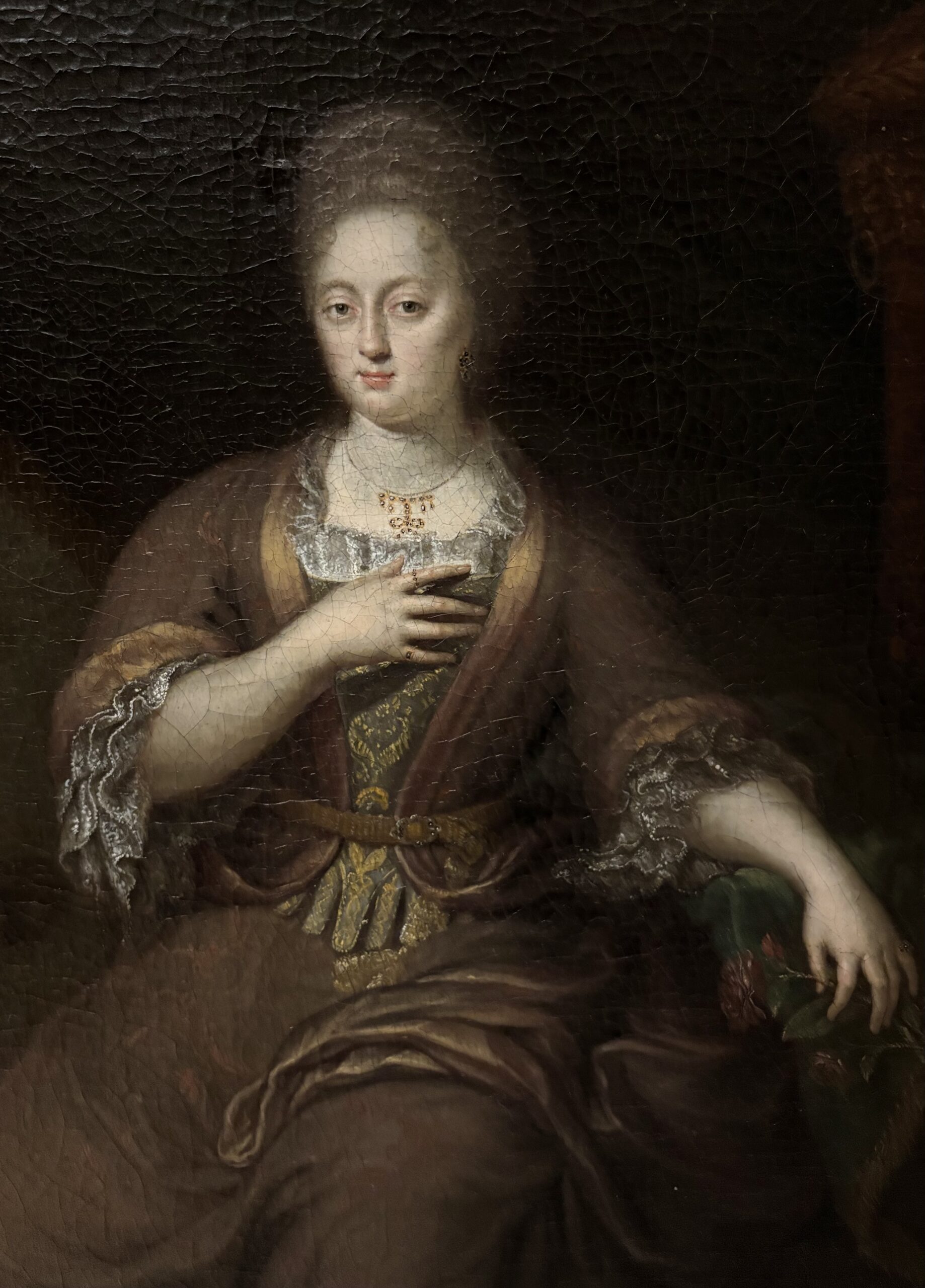
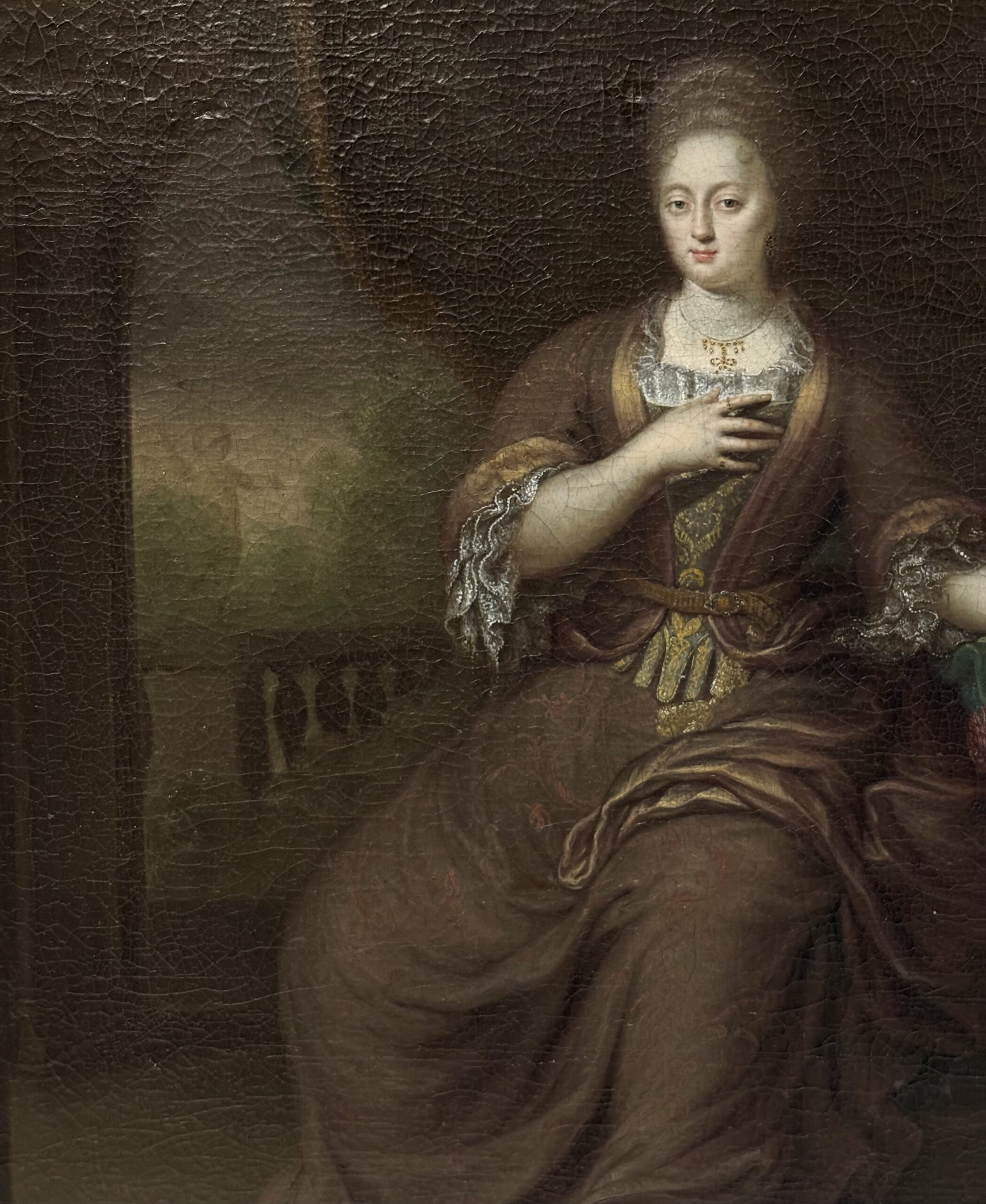
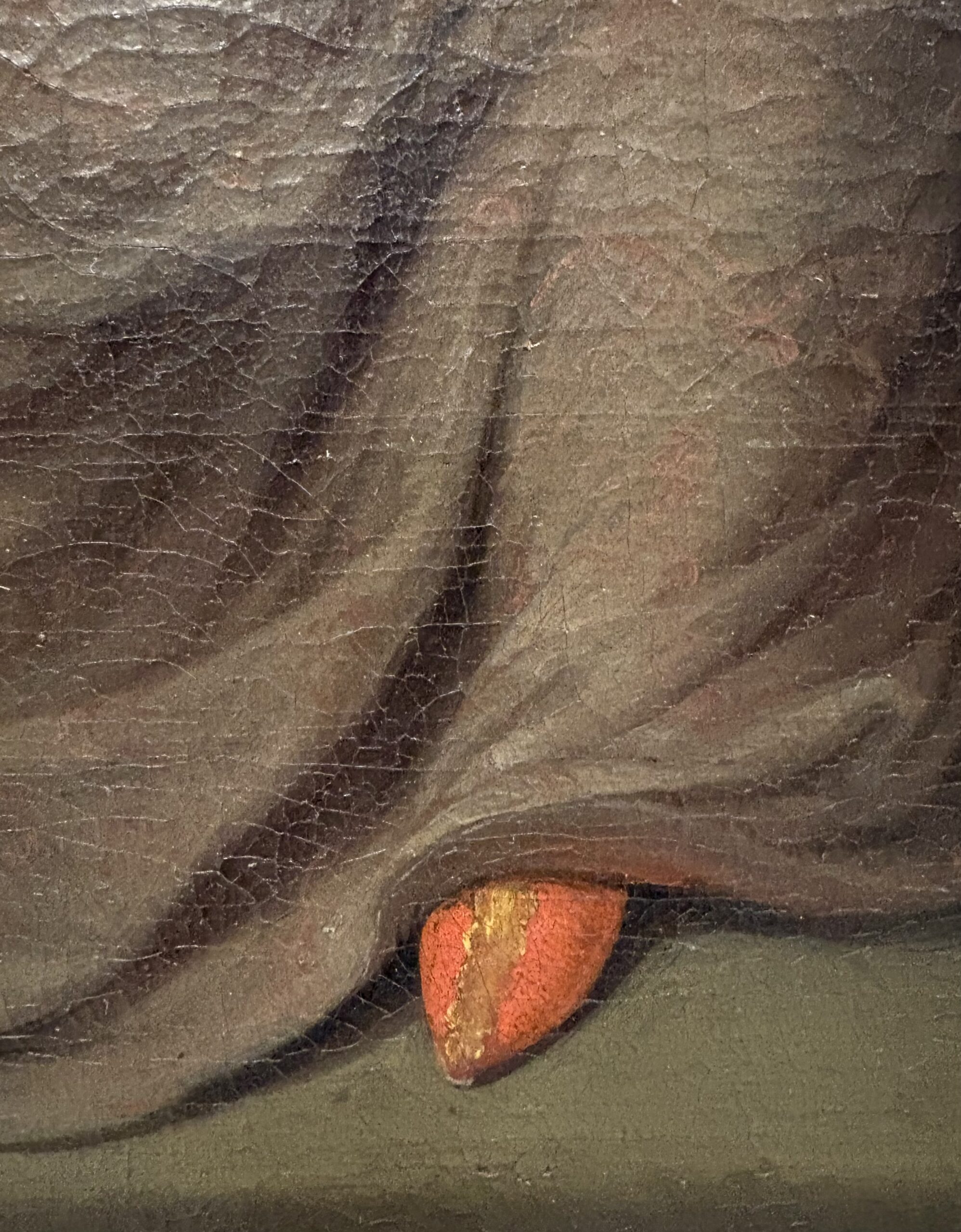
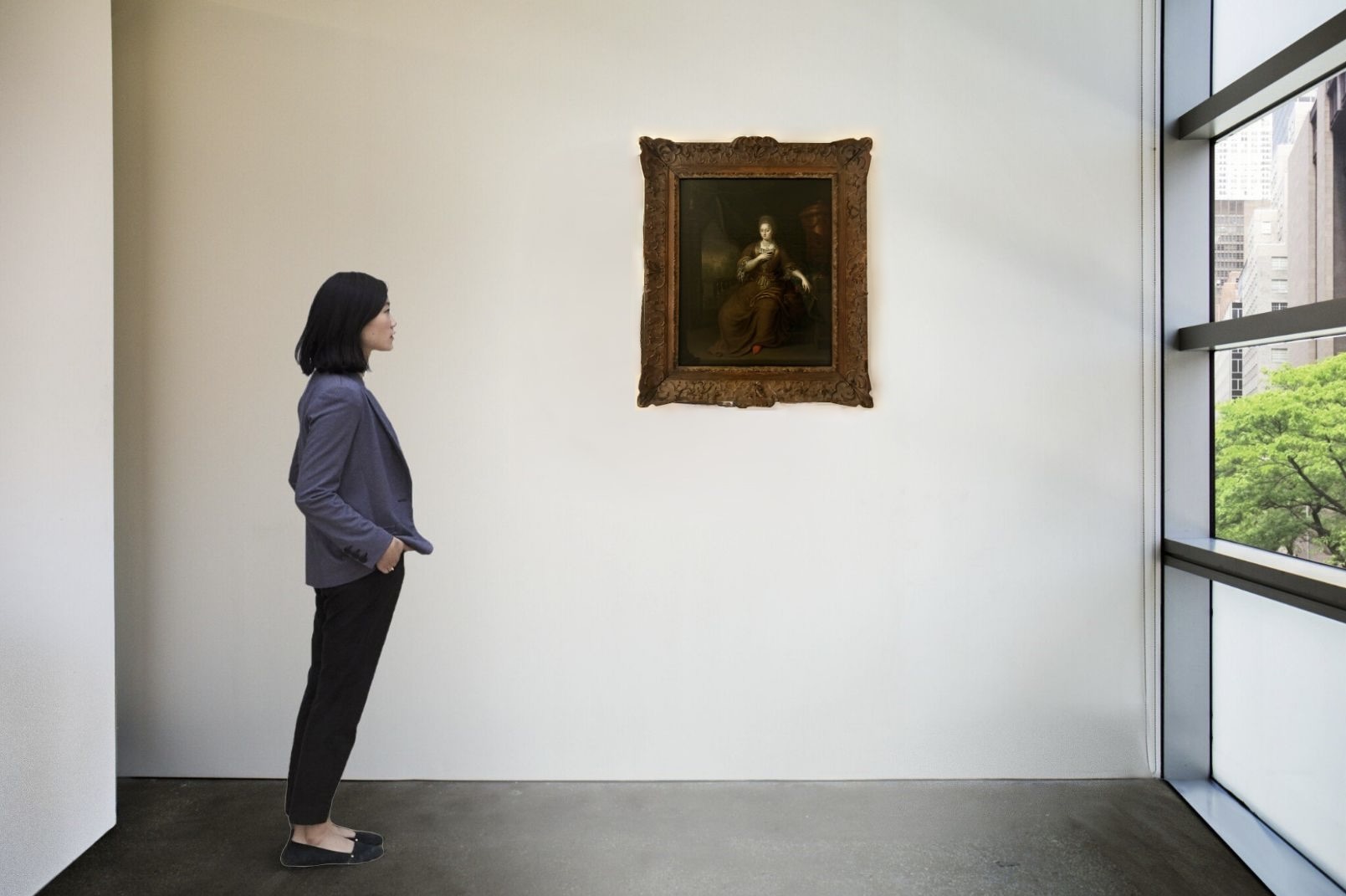
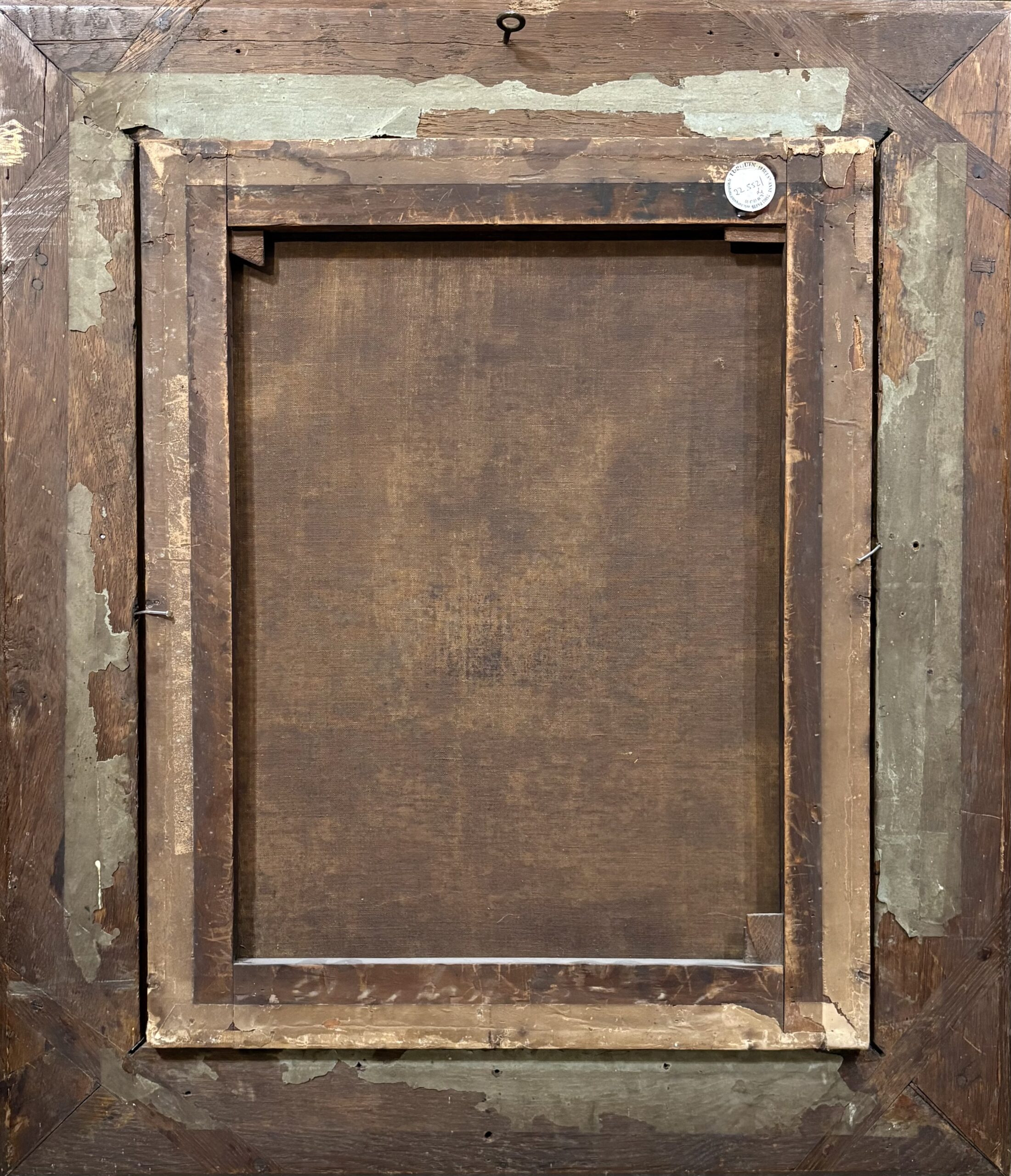
Portrait of a woman with jewelry, Dutch school from the beginning of the 18th century by the painter Gérard Wignama (1673-1741). Monogram lower right on the base of the G.W. column.
This refined portrait of a noblewoman is a typical example of the portraiture of Gerard Wignama, a Dutch Golden Age painter. Considered one of the “fijnschilder,” or “fine painters,” he was distinguished by his exquisite precision, invisible brushstrokes, vibrant colors, and meticulous rendering of materials such as fabrics, metals, and wood.
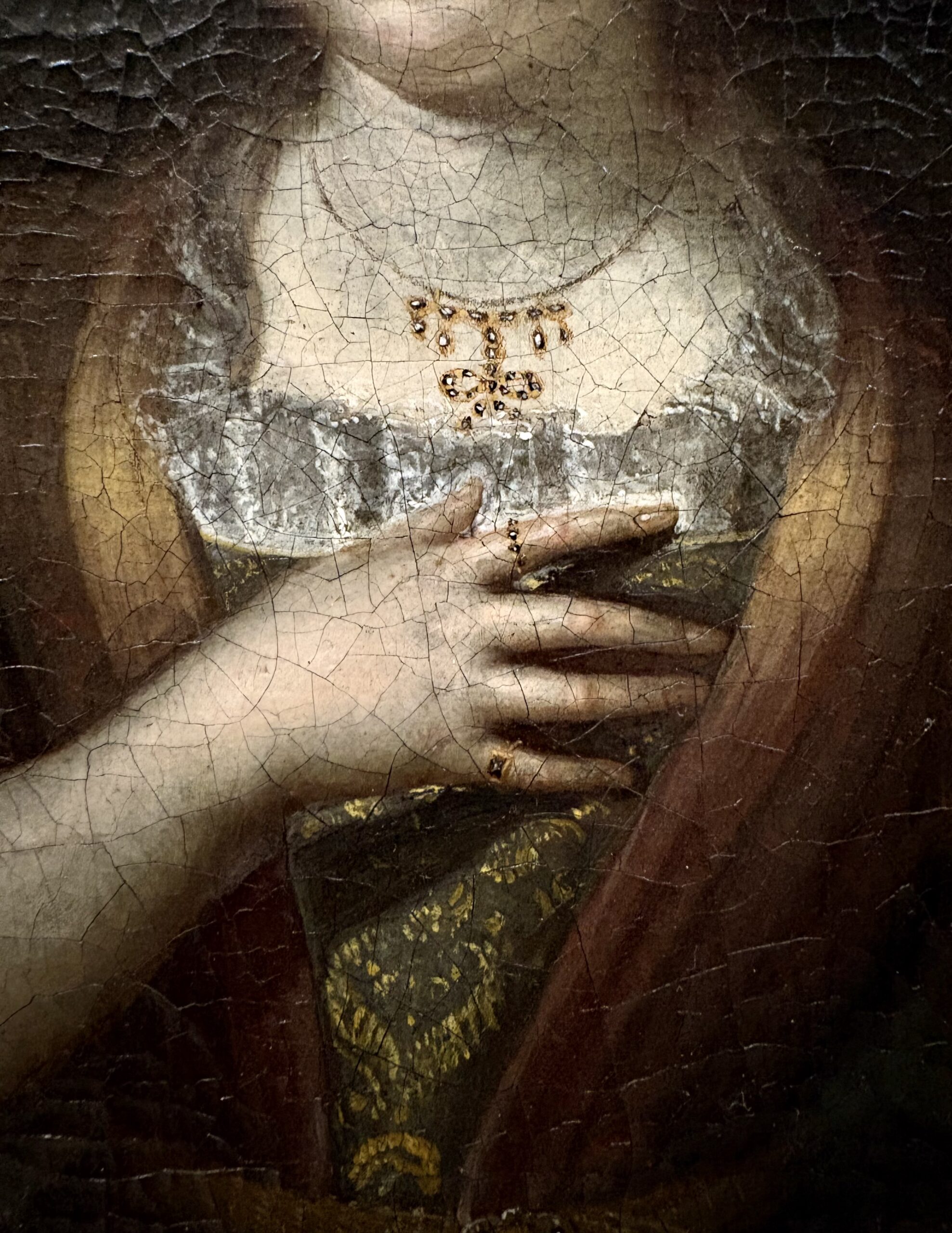
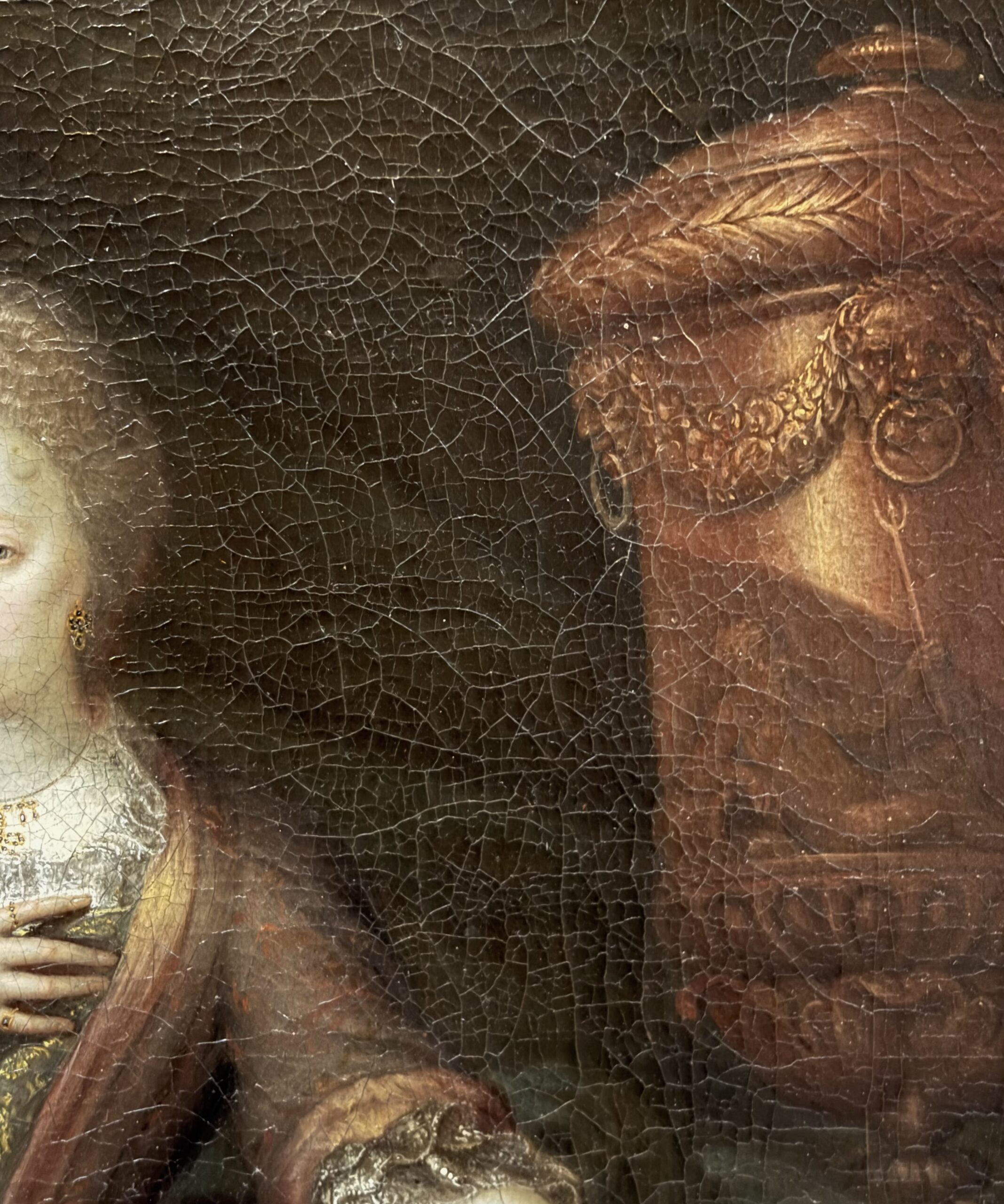
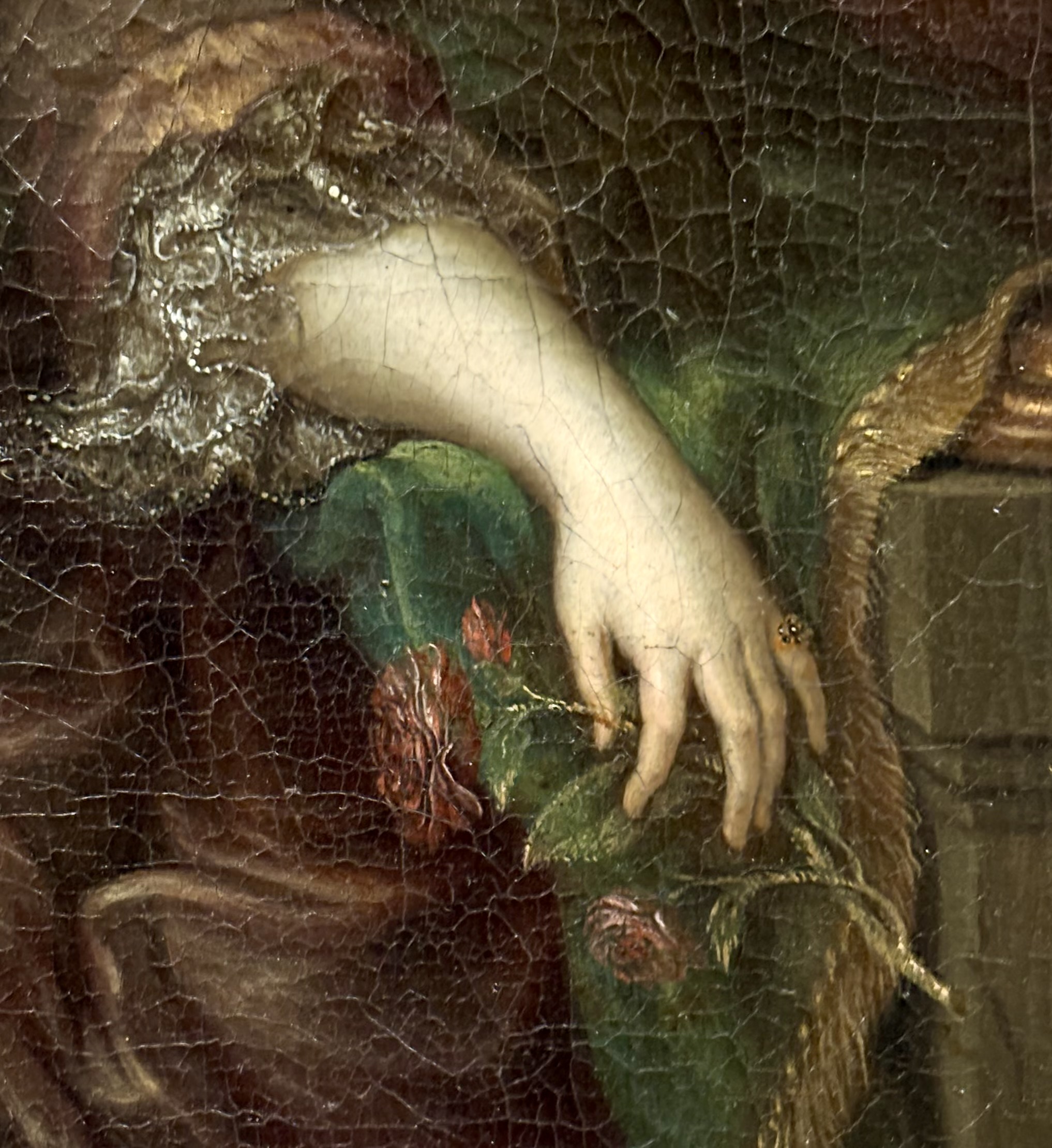
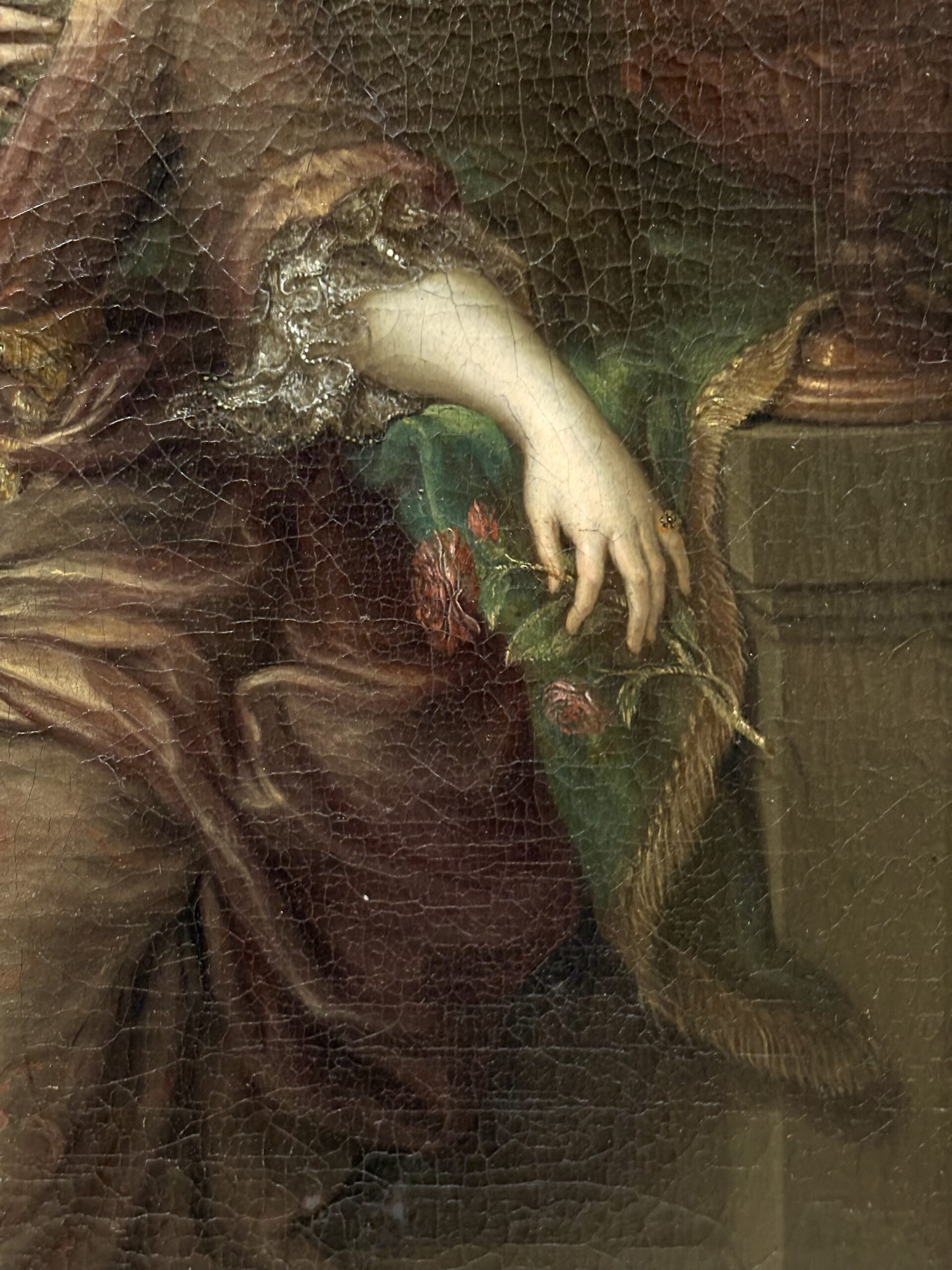
A close examination of the portrait reveals incredibly delicate work, from the ring the lady wears on her left little finger and her porcelain face to the elaborate brocade bodice of her dress, her necklace, and even the imposing vase at her side, adorned with a central mask and classical figures.
Our painting has only undergone cleaning in our trusted restoration laboratory, where the monogram was also analyzed and authenticated, thus definitively confirming its attribution to the painter. A comparison with two very similar portraits sold at auction at Christie’s in Amsterdam in 2007 would have been more than sufficient.
It is presented in an 18th-century carved natural oak frame. Accompanied by our expertise as accredited experts specializing in Old Master paintings.
Provenance: Private collection.
Dimensions:
canvas 58.2 x 46.5 cm
frame 78 x 65 cm
Biography:
Gerard Wigmana was born in Workum, Friesland, the son of merchant Jan Tiaerdts and his wife Gaitske Gatzes Wigmana – interestingly, he took his mother’s surname. Wigmana developed a passion for painting from a young age, as evidenced by an episode following his father’s death around 1688: when his mother wanted him to learn a respectable trade, Wigmana replied, “If I cannot learn to paint, let me learn to weave,” meaning he desperately wanted to become a painter. Wigmana took drawing lessons from a local stained-glass painter and studied under the German painter Joachim Burmeister before becoming a pupil of Jelle Sybrandi, a member of the Dutch Society of Painters. He then embarked on a Grand Tour southward from 1698 to 1702, visiting Paris, where he studied at the Royal Academy for a year and a half at the beginning of the journey, after which he continued on to Rome, arriving on November 14, 1699, and entering the studio of the painter Giovanni Maria Morandi, himself a pupil of Pietro da Cortona. In the Eternal City, he also met the artist Daniel Seiter and provided details of the latter’s life to the biographer Arnold van Houbraken. In Rome, he copied three paintings by Raphael and is also known to have copied a painting by Titian in Modena. By 1702, Wigmana had returned to the north and was living in Dokkum and Leeuwarden, where he married in 1707. He established himself as an independent teacher, and the high regard for his talent is evidenced by his position as art tutor to the children of Princess Henrietta Amalia Johan Willem Friso and her seven sisters, a position he held for seven years. The artist then settled in Amsterdam. He also undertook a short trip to London in 1737. Wigmana’s time in France and Italy, where he studied the works of the great Renaissance masters, proved highly influential on his work. According to biographer Johan van Gool, the artist made so many copies of Raphael that he became known as the “Frisian Raphael.” Wigmana held sincere opinions on the development of contemporary painting, which he expressed on paper and which were published under the title “Korte schets de denkbeeld, Om tot een groote volmaaktheid in de schilderkonst te geraken” (A Short Sketch of the Image, to Achieve a Larger Volume in the Painting Arts), printed posthumously in 1742 by bookseller Jacobus Ryckhoff. Wigmana lists nearly fifty artists from whom he draws inspiration. Besides Raphael, Correggio, Guido Reni, Veronese, and Titian are also mentioned. The paintings Wigmana produced after his return from the South can be described as typical works of the classical school of “fijnschilder,” or fine painters, who excelled in the refined and meticulously detailed depiction of fabrics and textures. These painters specialized in scenes of everyday bourgeois life (domestic interiors, merchants, scholars), still lifes, and portraits. Their works, often small in size, were intended to be collected and admired up close in the cabinets of the wealthy bourgeoisie. They were distinguished by their great precision, their glazed surfaces, and their ability to reproduce reality with an almost microscopic level of detail in small formats.