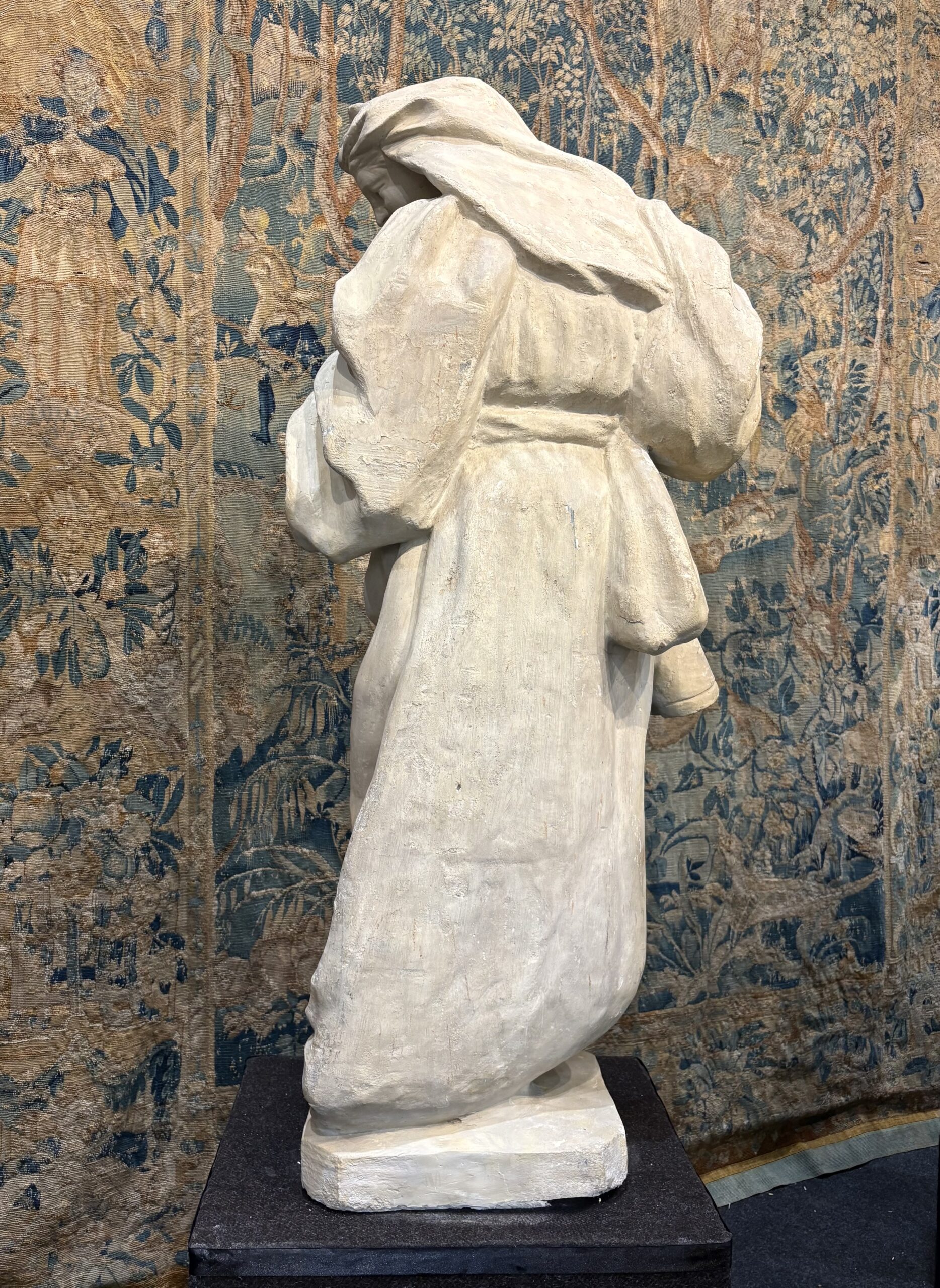
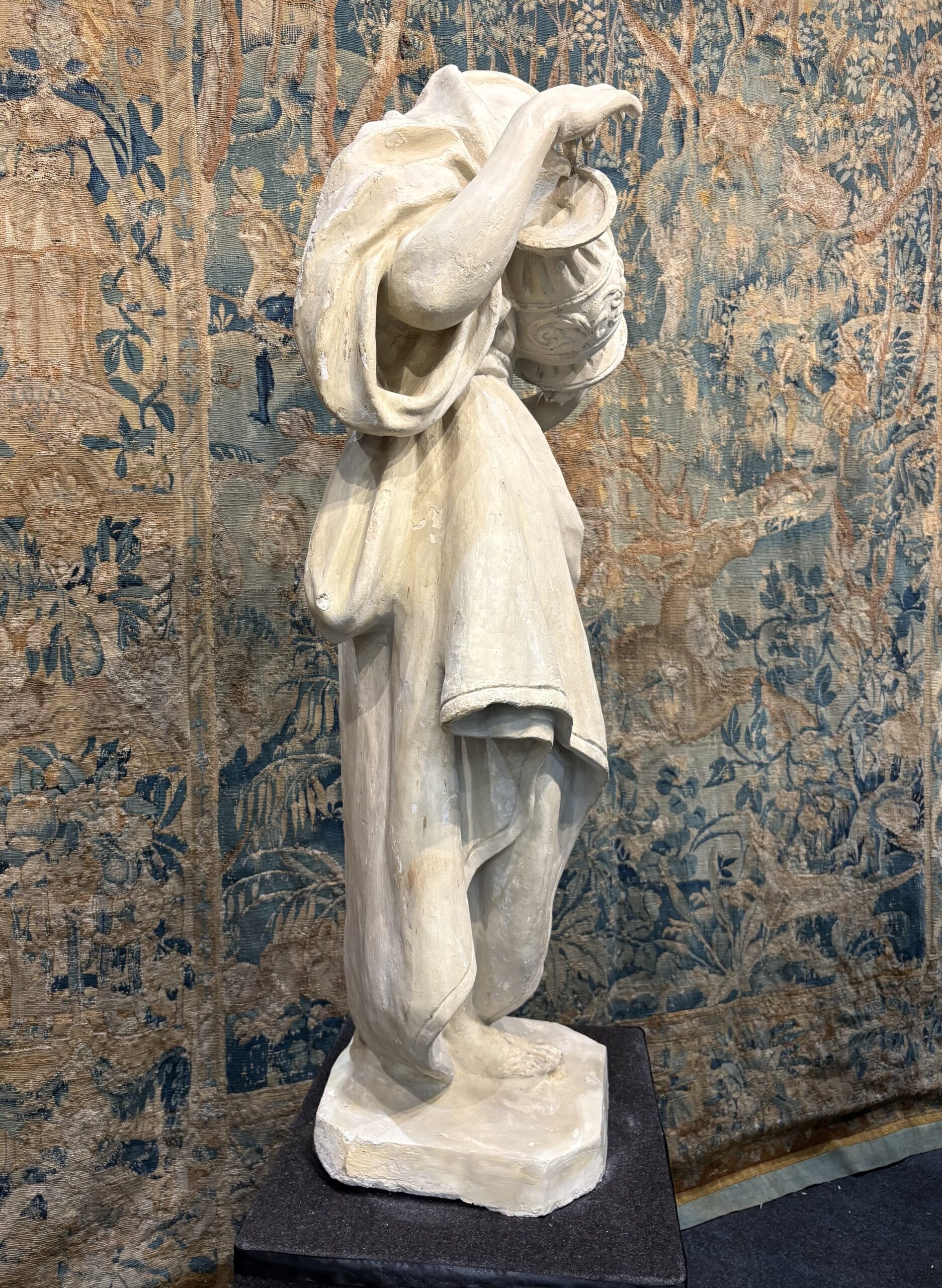
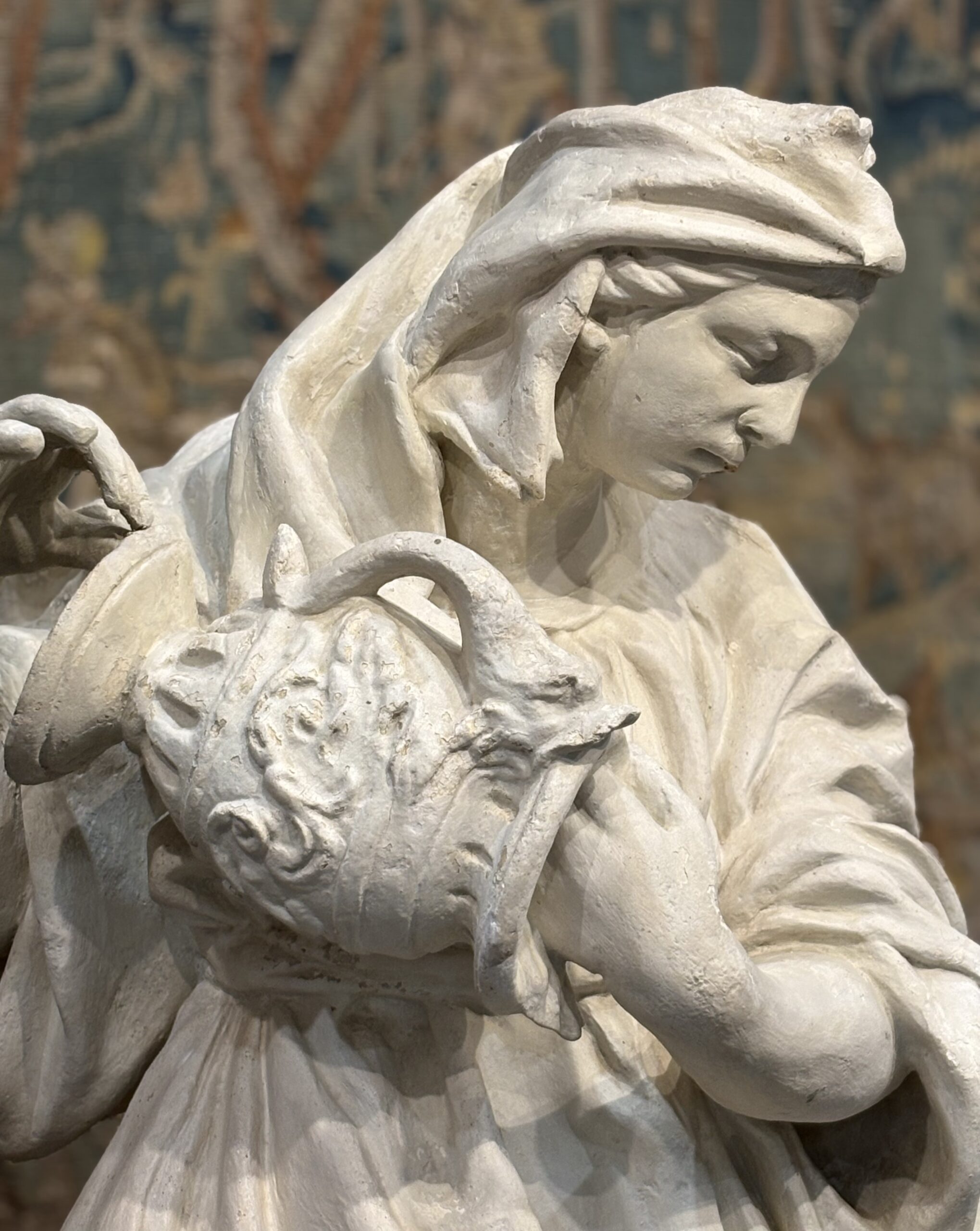
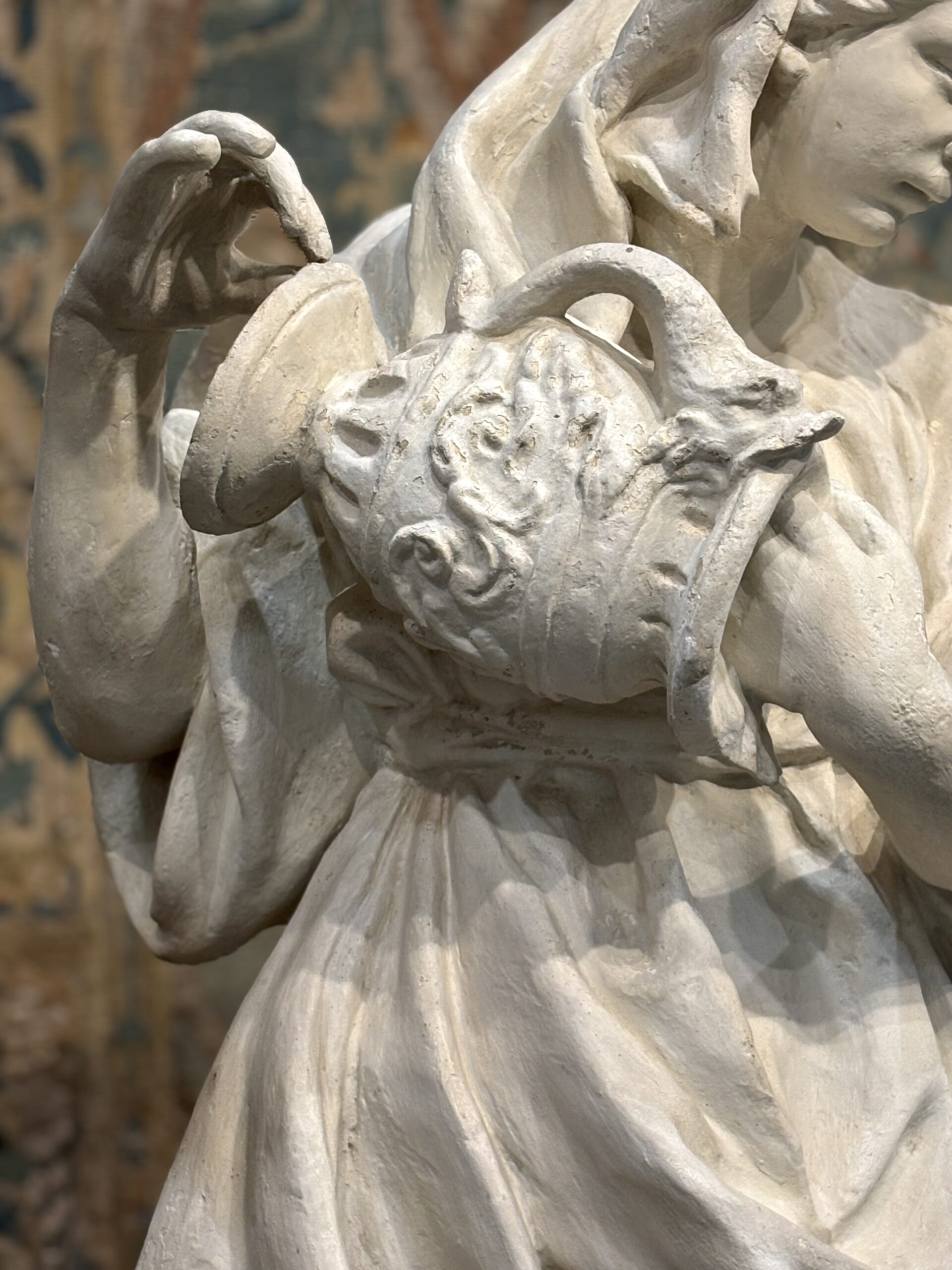
Giacomo De Maria (bologna, 1762–1838) Allegory Of Temperance

€6,500.00

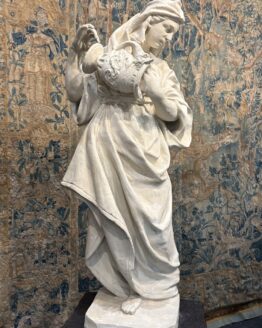
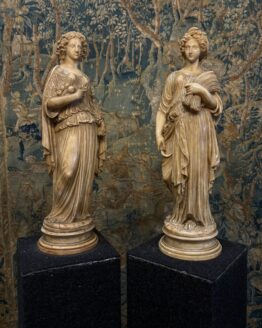
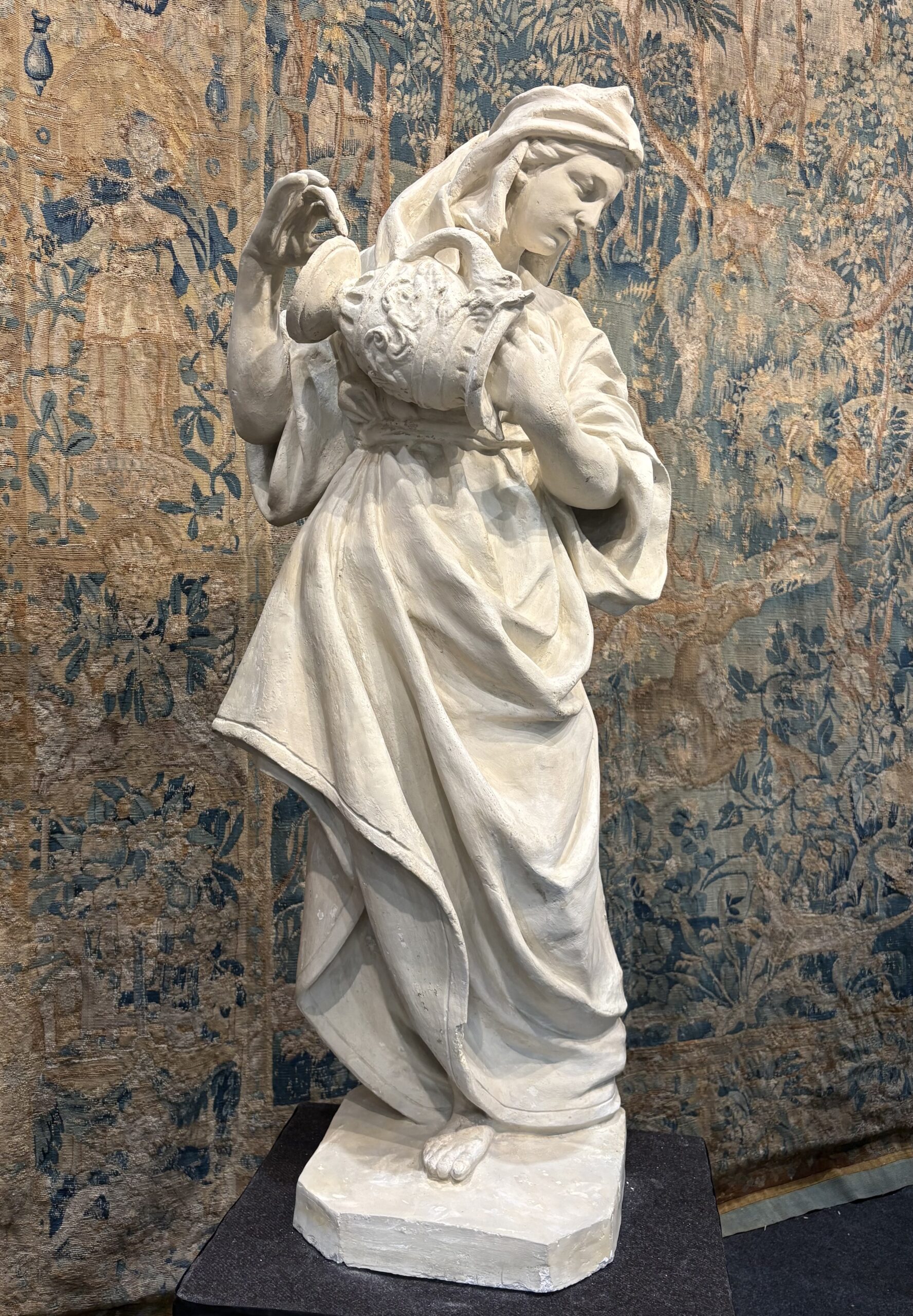
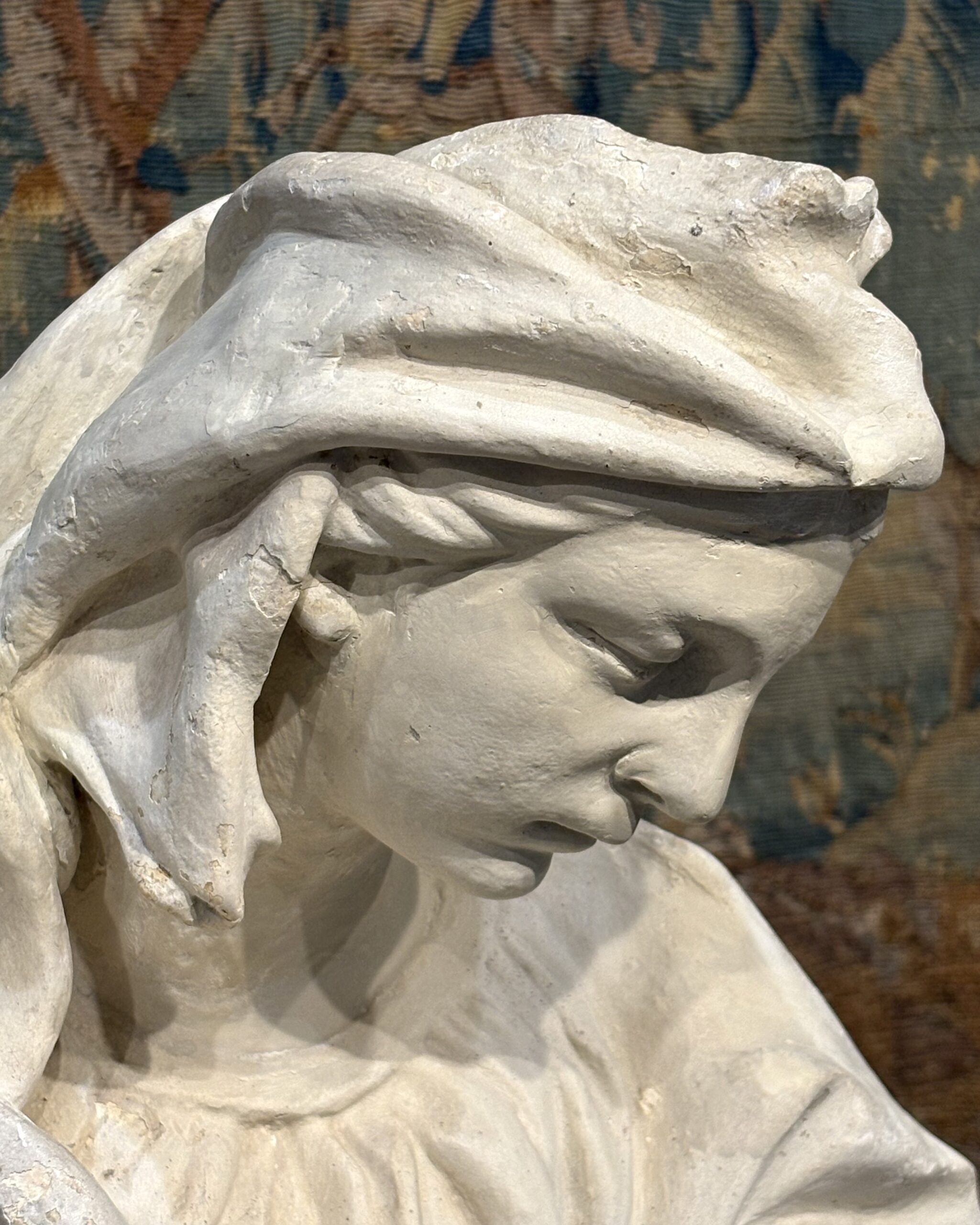
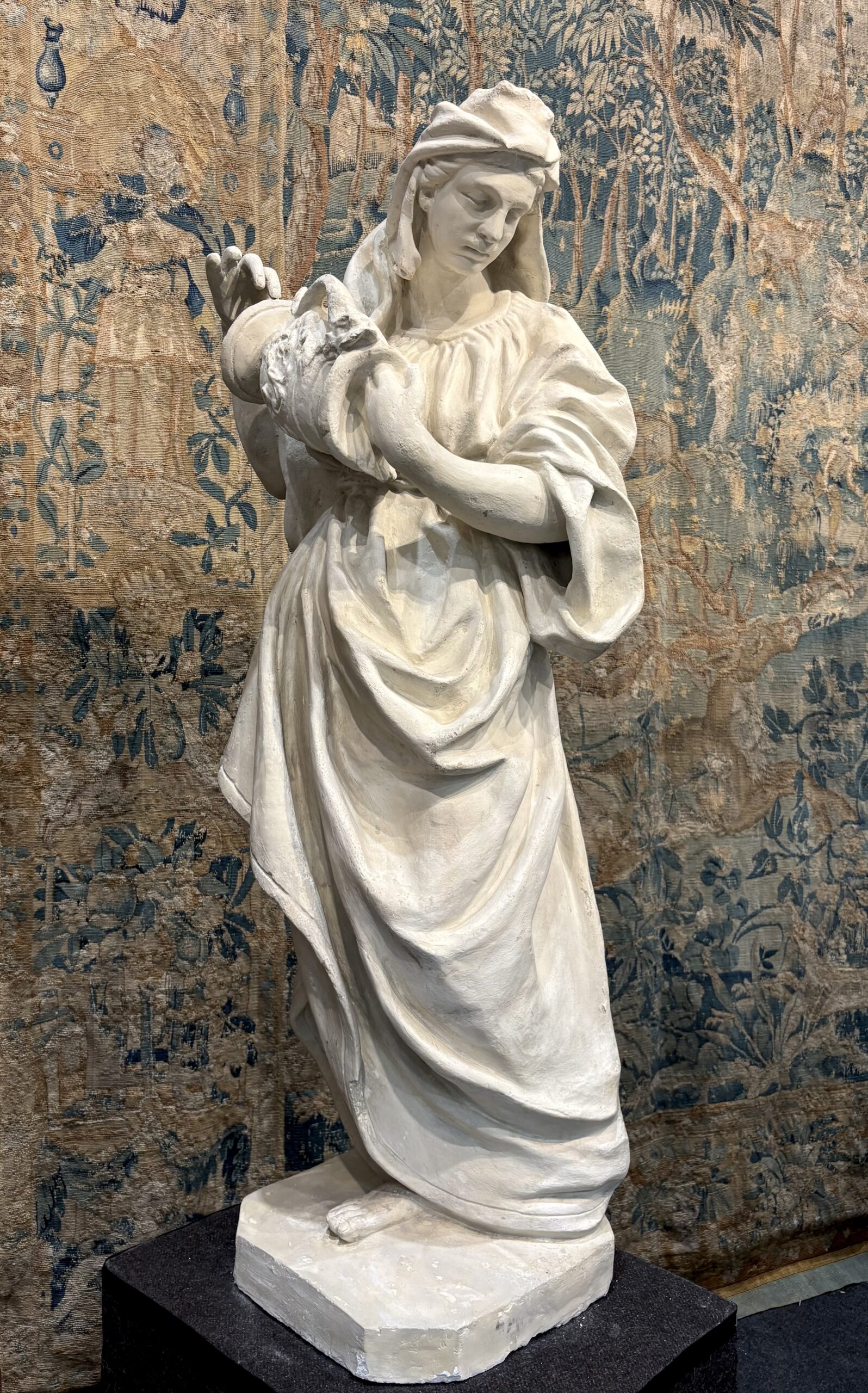
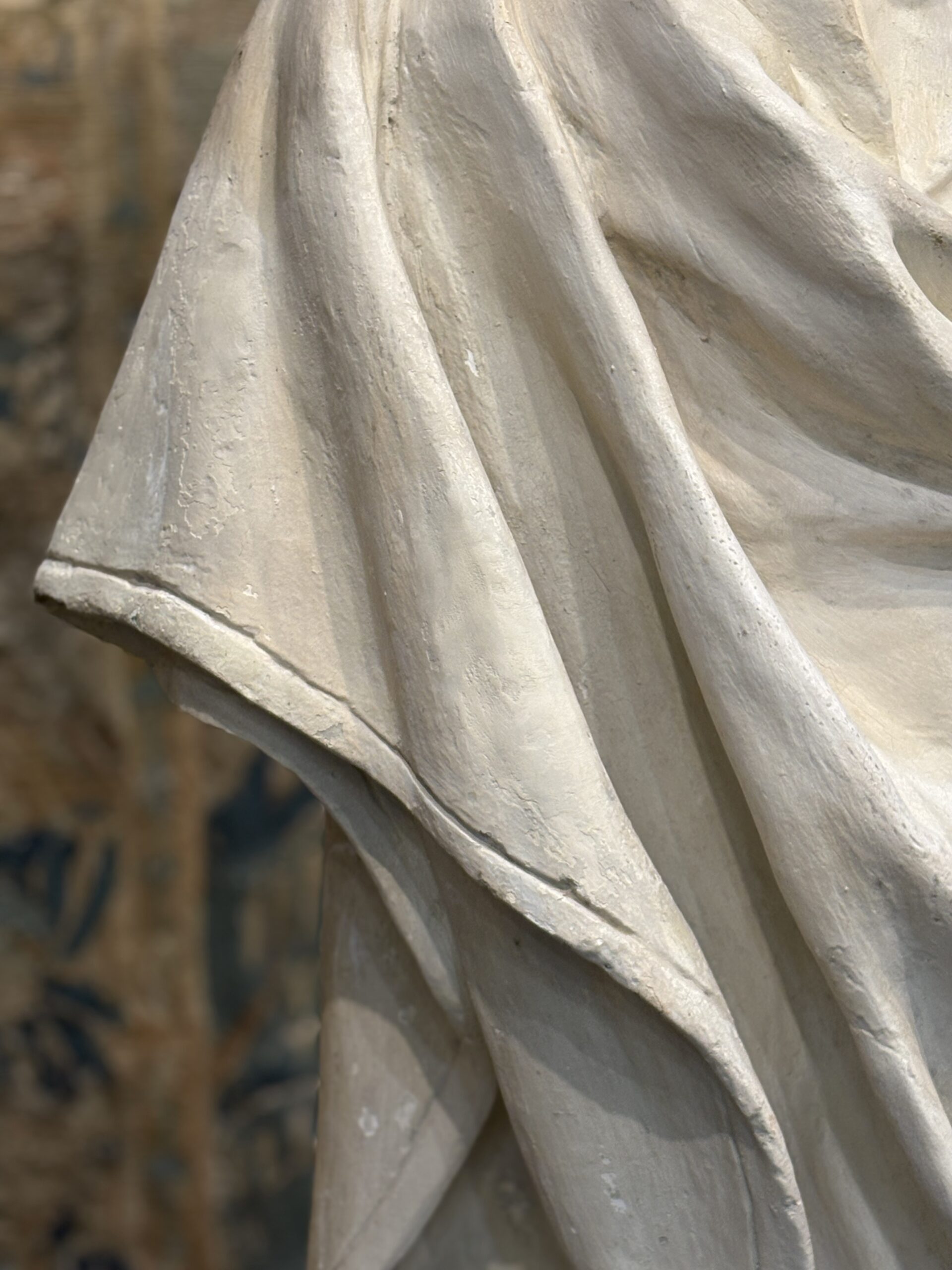
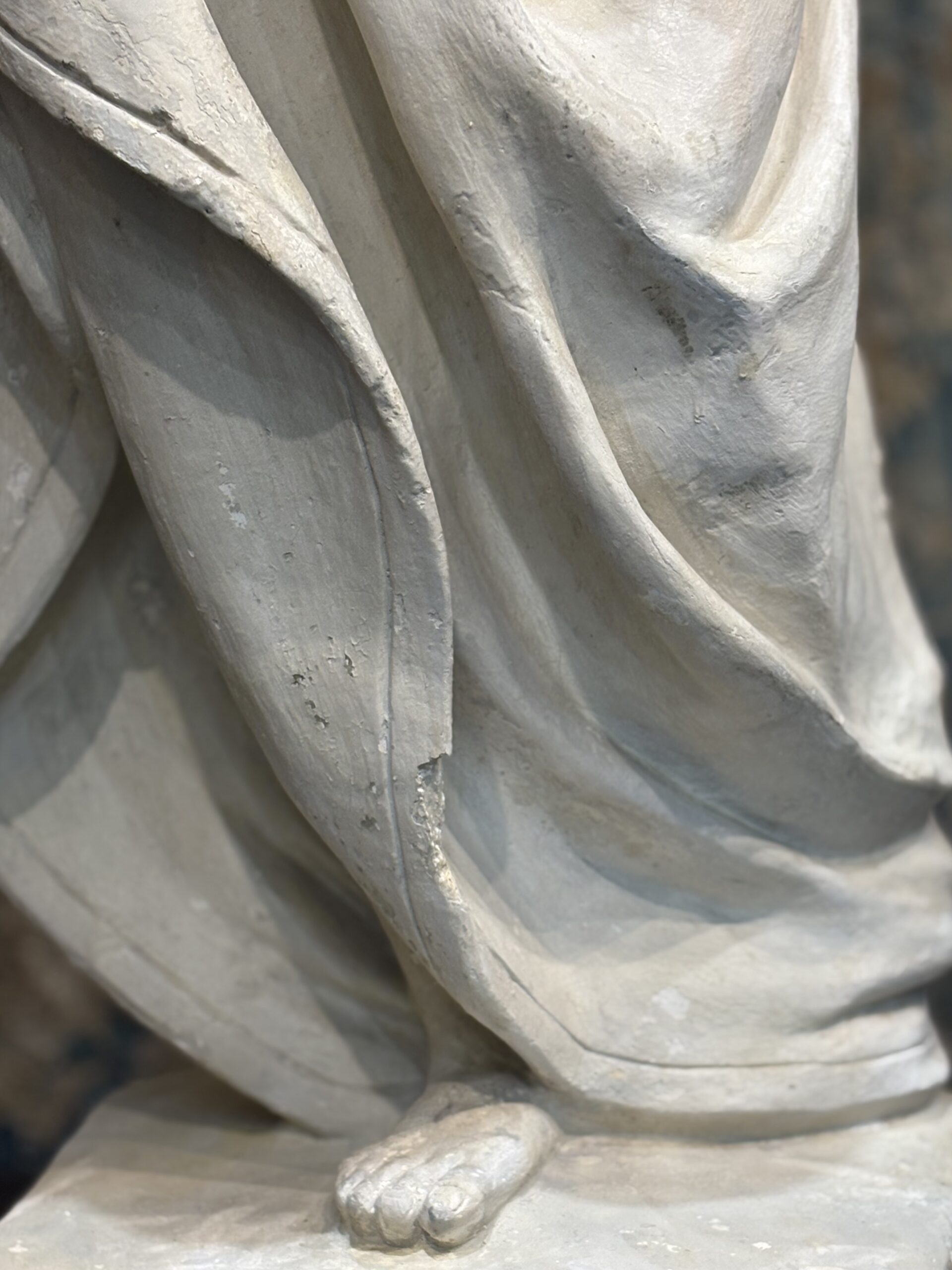
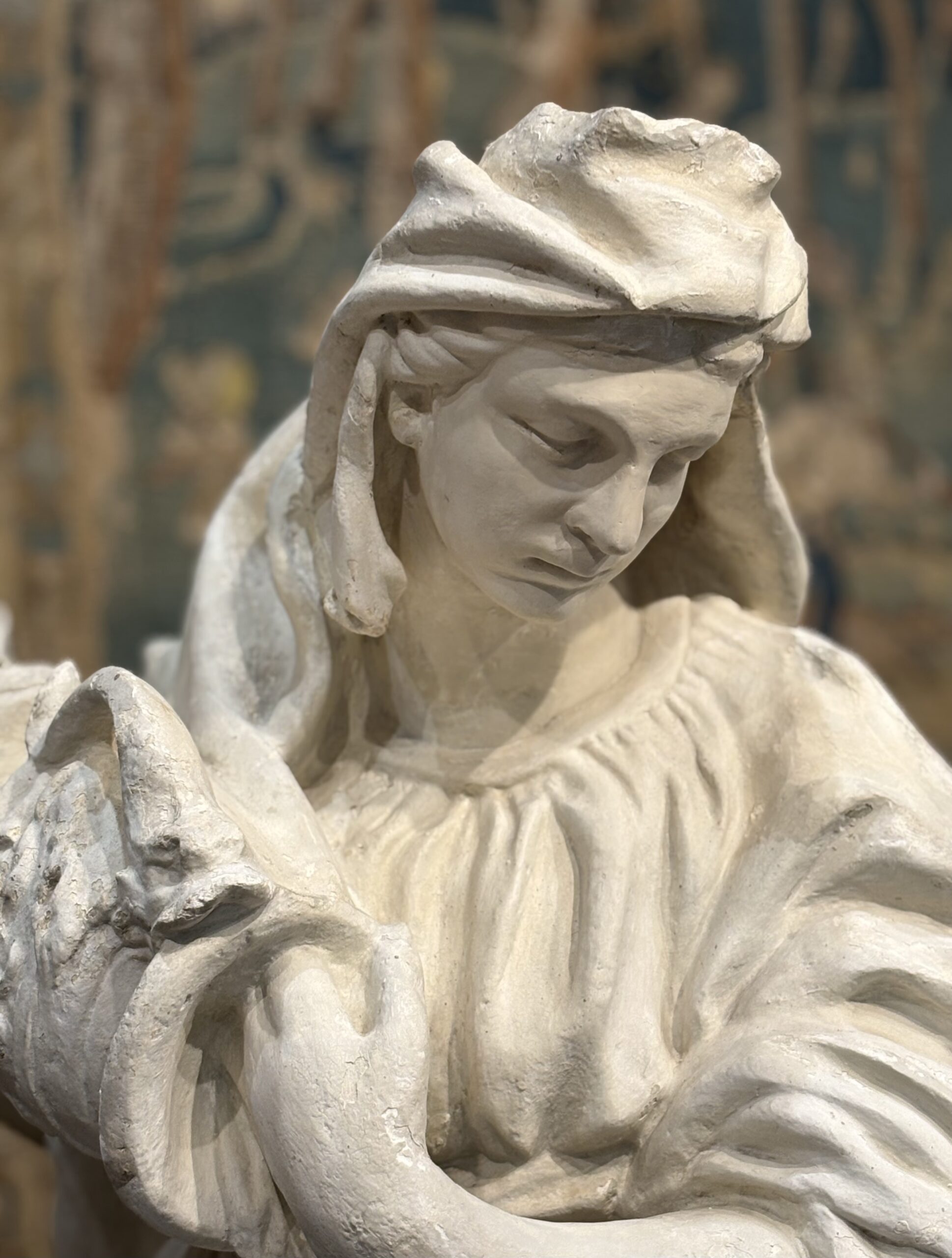
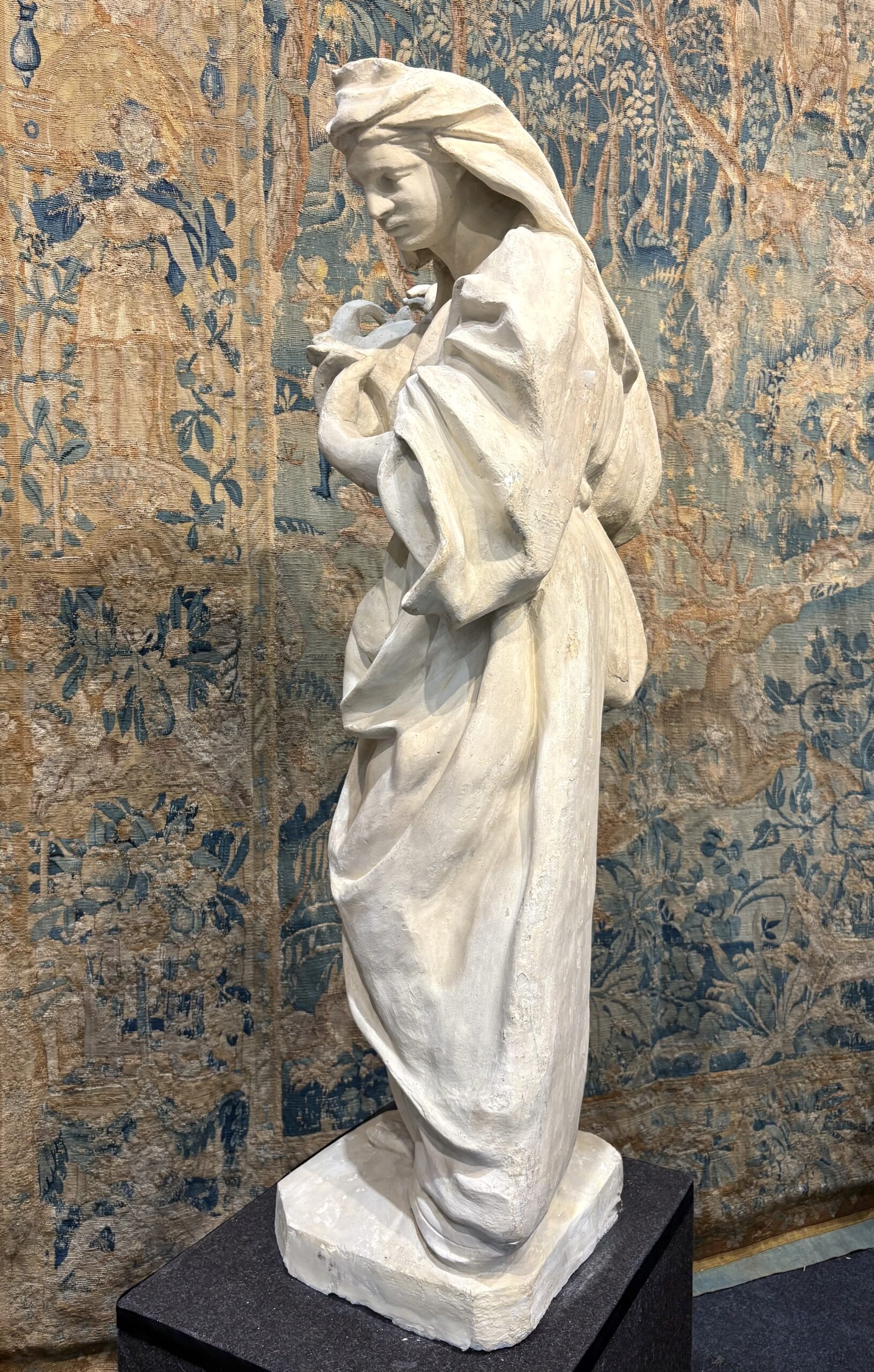
An important stucco sculpture depicting the allegory of Temperance, attributed to Giacomo De Maria (Bologna, 1762–1838); provenance: Villa San Martino, Monte San Pietro, Bologna.

Giacomo De Maria was a leading Neoclassical sculptor from Bologna; a contemporary, student, and friend of Antonio Canova, he played a prominent role in the spread of Neoclassicism in his hometown. He trained in Bologna at the Accademia Clementina. His natural talent immediately set him apart from his classmates, allowing him to quickly earn numerous accolades, both for his dedication and for the quality of his works. In 1787, De Maria moved to Rome for a brief period of study, which gave him the opportunity to examine firsthand the works preserved in the most prestigious private collections of antiquities and to visit archaeological sites. It was during this period that he met Antonio Canova, who was already establishing himself in Roman artistic circles as one of the most gifted sculptors. In Rome, Giacomo De Maria immersed himself in the vast world of ancient sculpture and was enriched by his contact with the brilliant figures of the Renaissance and the Roman 17th century. In particular, he had the opportunity to discover the complex world of the marble sculptors’ workshops, under the supervision and guidance of the Master. In this regard, his personal bond with Antonio Canova was decisive: from being a mere admiring visitor to the studio on Via delle Colonnette, he soon became a close friend—a relationship that remained strong and mutual throughout their lives. Thus, upon his return to Bologna — where he was distinguished by being appointed to a professorship at the Academy of Fine Arts —, succeeded in advancing the art of sculpture, freeing it from the Baroque influences of his predecessors and infusing it with the epic power of Neoclassicism, whose essence and language he had fully grasped. In Bologna, he immediately received prestigious commissions and was triumphantly welcomed as a student of Canova; there he created numerous works, among which the neoclassical decoration of Palazzo Hercolani stands out. Although the art of sculpture has always been associated with marble, it is important to understand that, in reality, a wide variety of materials were used, the choice of which depended simply on local availability. The lands of the Cispadane region, rich in river silt accumulated over millennia, were no strangers to stone or marble production in past centuries; however, beginning in the Renaissance and continuing through subsequent generations, they witnessed the emergence of what might be called an “epic poetry of clay”. This was expressed primarily through religious depictions that fostered an immediate spiritual communion, as well as in the spectacular sacred performances of the “Lamentations,” capable of touching the depths of the heart and drawing the viewer into a shared sense of intimate grief. Furthermore, thanks to the gypsum quarries—which provide *scagliola* and stucco, highly malleable materials— these very lands have become a veritable creative hub, teeming with figures and forms, ubiquitous in both churches and palaces, serving both ornamental purposes and symbolic significance. Our sculpture boasts a prestigious provenance, and its attribution can be confirmed with certainty. It was part of a series of allegorical sculptures that adorned the grand hall of Villa San Martino. The owners of the estate, the noble De’ Bianchi family—which became Sassoli De’ Bianchi at the end of the 19th century following a marriage alliance—maintained close ties with the sculptor Giacomo De Maria, who received commissions from them. The artist worked directly on the decoration and artistic enhancement of the De’ Bianchi family’s properties. Furthermore, his presence in Monte San Pietro, near Bologna—where Villa San Martino is located—is documented in cultural heritage archives in connection with the creation of an altarpiece for the church of Santa Maria Assunta. Finally, he often used stucco in his creations, which are distinguished by their admirable drapery; the decorations of the monumental staircase at Palazzo Hercolani serve as a prime example. In classical iconography, Temperance is often depicted as a young woman mixing or pouring water, in order to moderate excesses and passions. She is portrayed in a dynamic and sinuous pose (a *contrapposto* movement), while gracefully holding a vase richly adorned with embossed motifs. Her head is wrapped in a soft veil that falls over her shoulders, framing a face with classical and serene features. The drapery of her gown is deep, three-dimensional, and characterized by marked contrasts of light and shadow—elements typical of the sculptural tradition of the late Baroque or Neoclassicism.

Dimensions H 115 cm L max. 45 cm Base 31 x 29 cm

Categories: ,

Description

Chiti Stefano, cultural heritage expert registered in the Italian Register under number 195.

All the objects are accompanied by invoice and expertise and, for shipments outside the EU, items are accompanied by a Certificate of Free Export for Italian Fine Arts.


Our primary concern is to ensure fast and careful shipping, allowing the customer to receive their items in perfect condition. Packaging is custom-made according to the specific requirements of each shipment. We utilize two different shipping channels, depending on the nature of the items and their destination. Within the European Union, we work with two trusted, specialized carriers that serve major destinations once a month. For shipments outside the EU, we partner with DHL, chosen for their efficiency in handling customs procedures and the high quality of their service. DHL is also used within the EU for smaller packages, such as paintings, small sculptures, and other objects.


Payments accepted:
-bank transfer
-credit card via link Nexi X-PAY :a Nexi payment link, called Pay-by-Link, is a system that allows merchants and professionals to collect payments remotely by sending customers a secure link via SMS, email, or chat (WhatsApp, etc.), transforming their POS (including smart POS) into a remote payment tool. Nexi is a leading European PayTech company, a leader in digital payments in Italy, offering services and technology infrastructure for banks, businesses, merchants, public administration, and consumers, managing cards, POS, e-commerce, and solutions for secure and fast transactions
-PayPal with a 3.4% surcharge