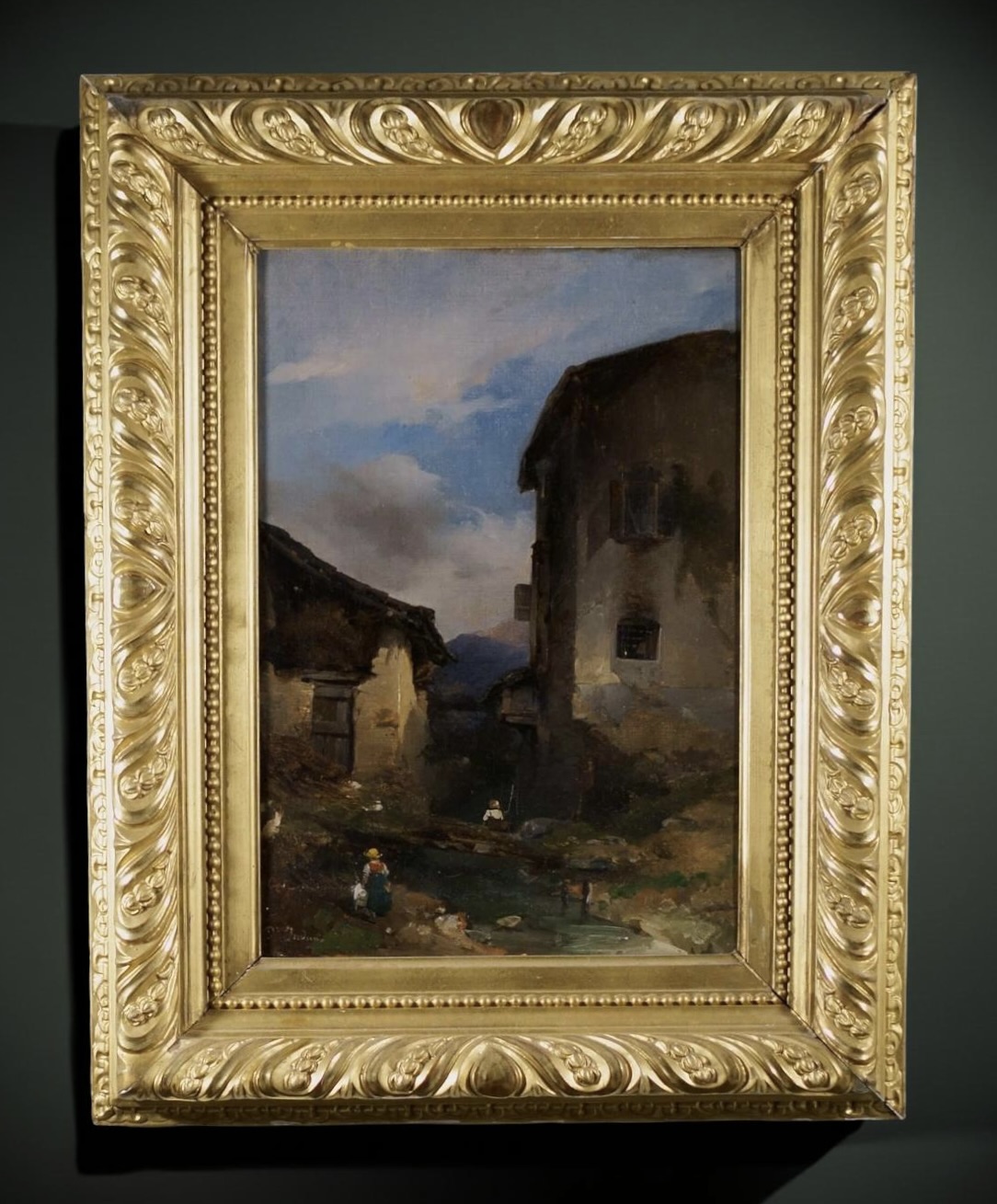
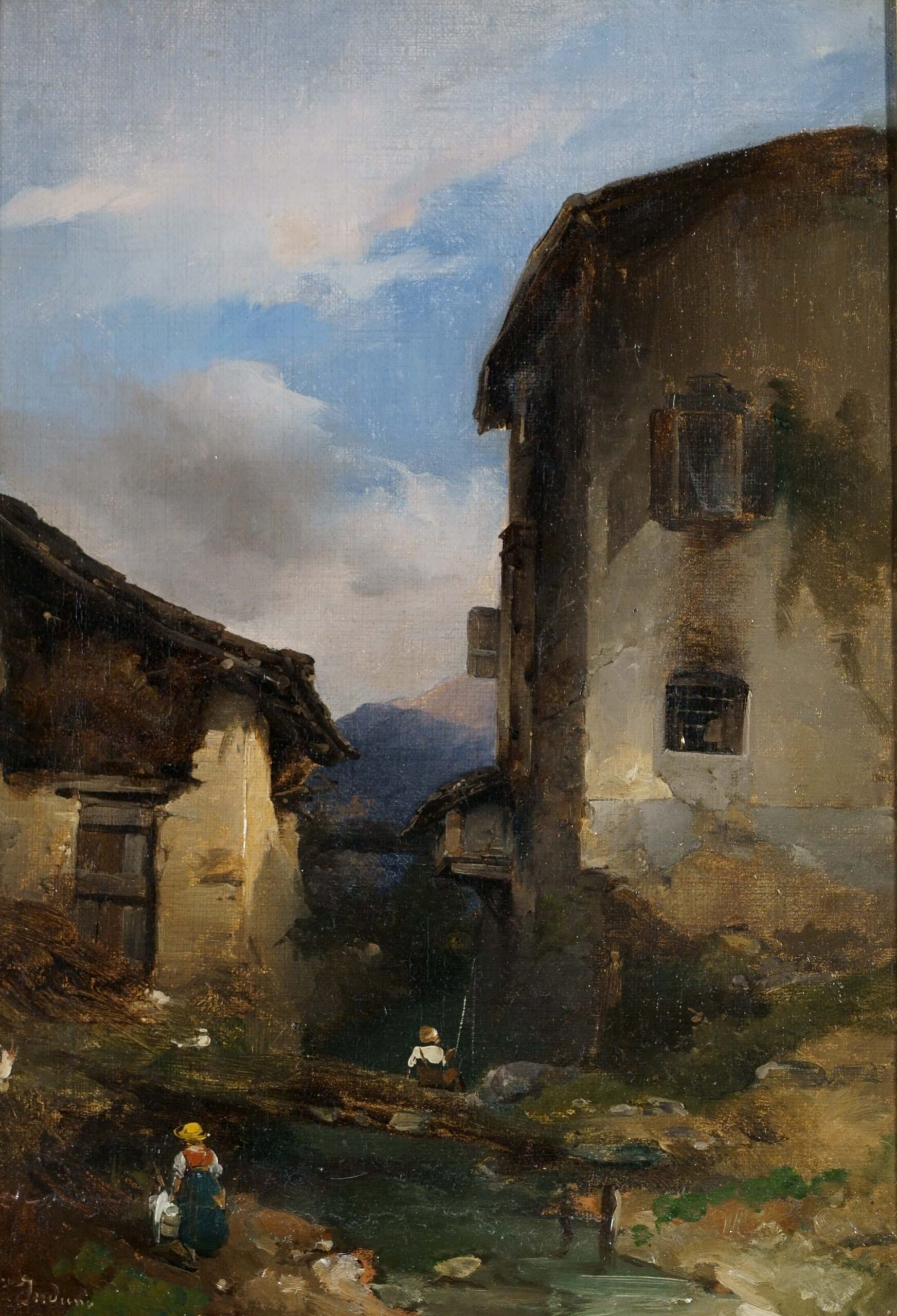
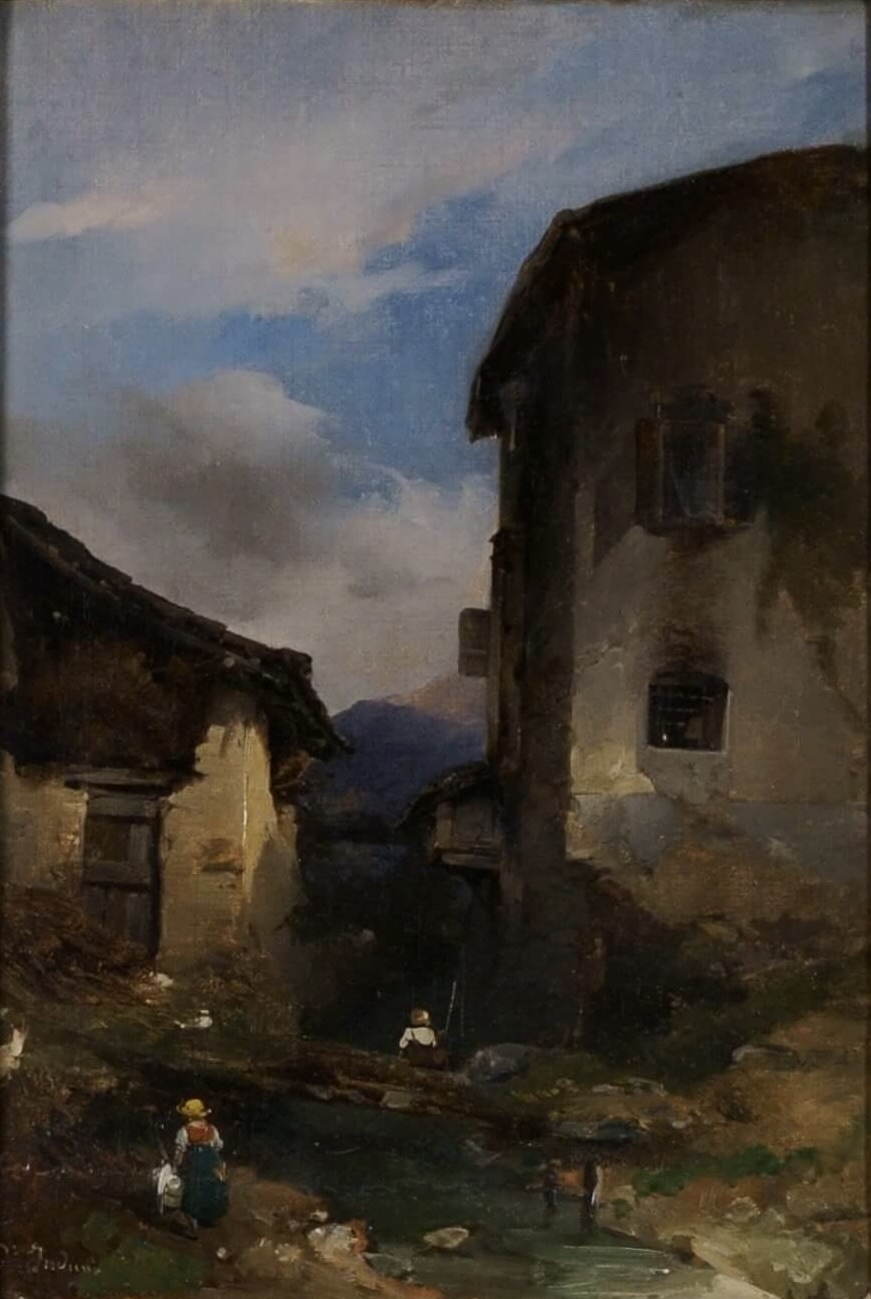
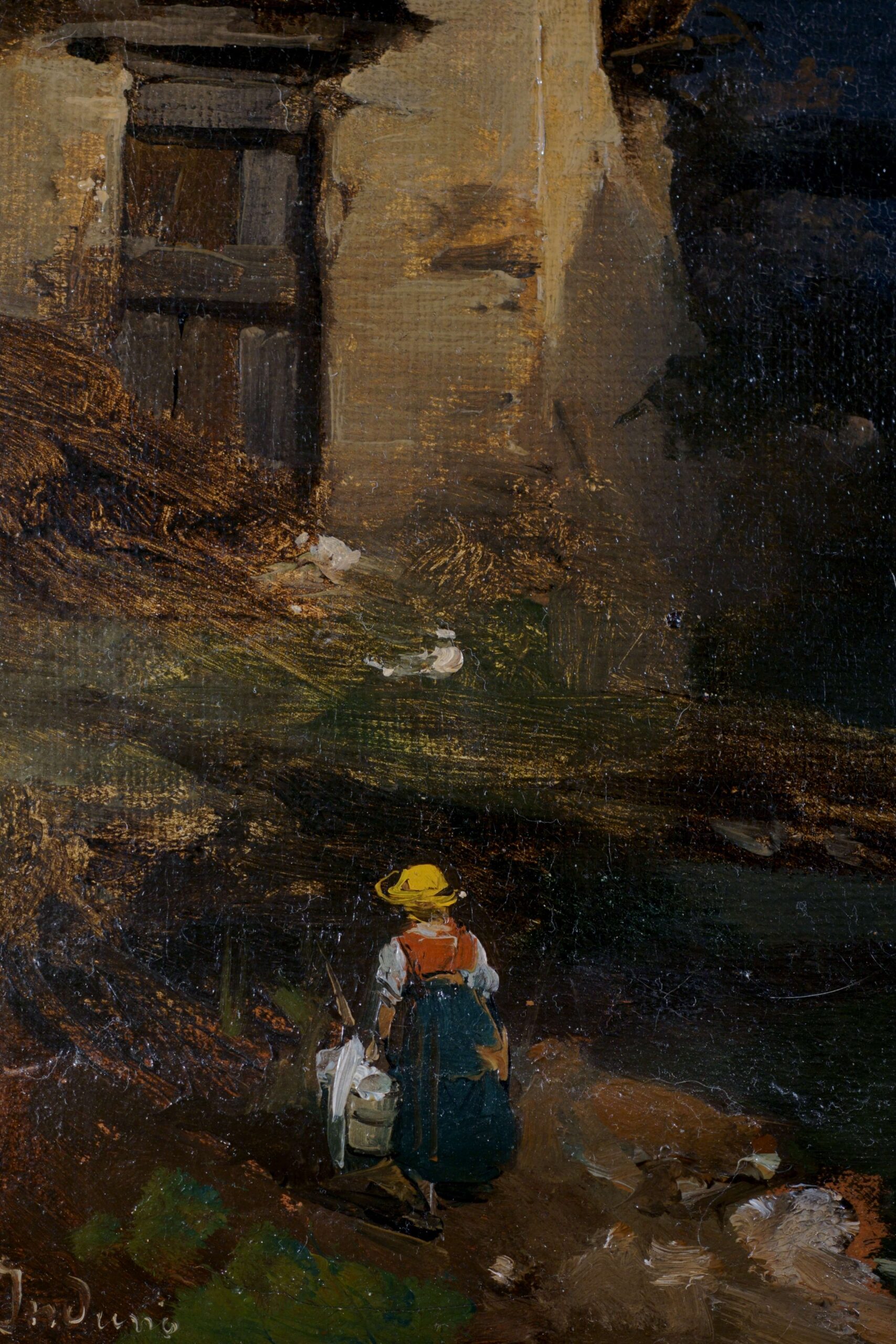
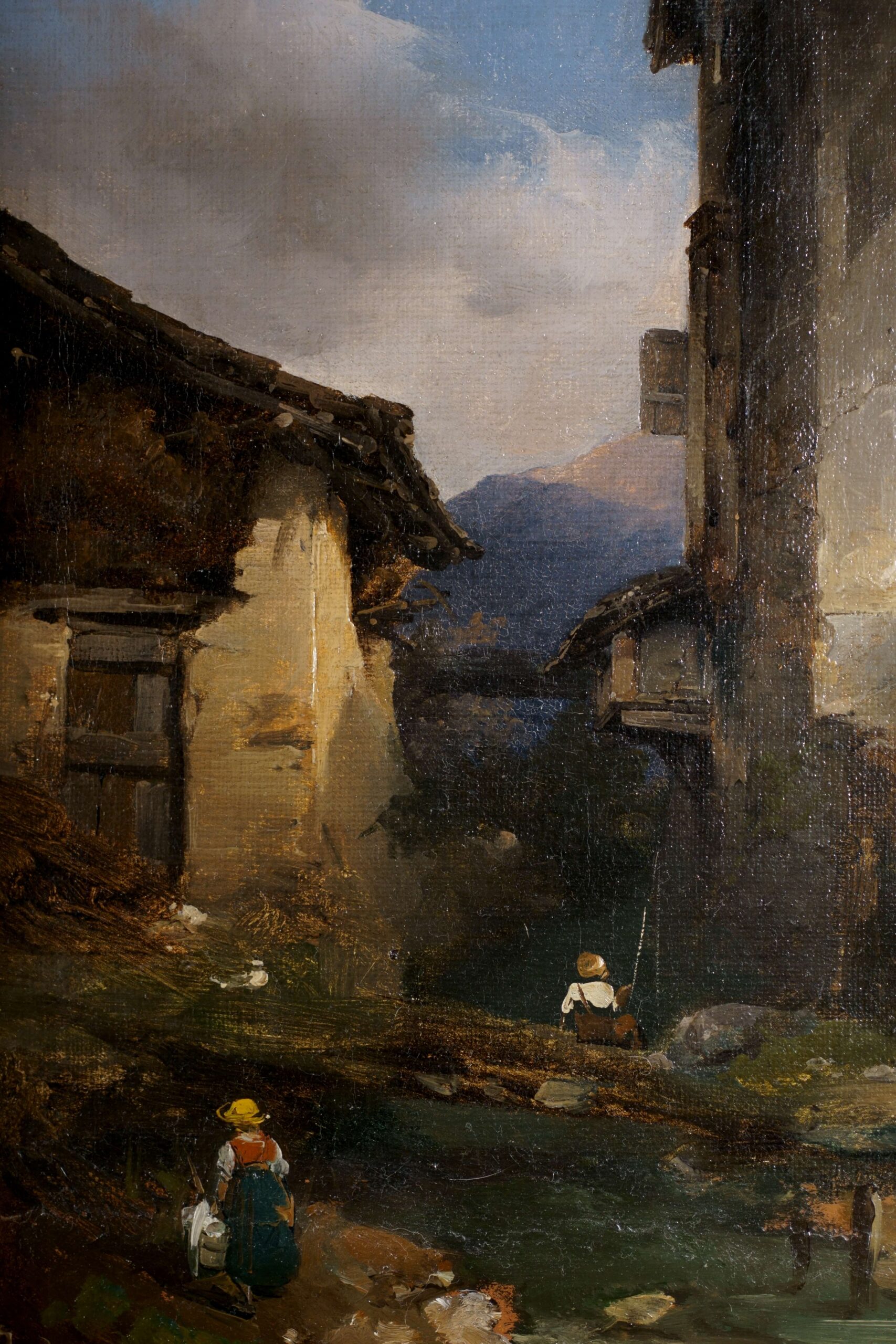
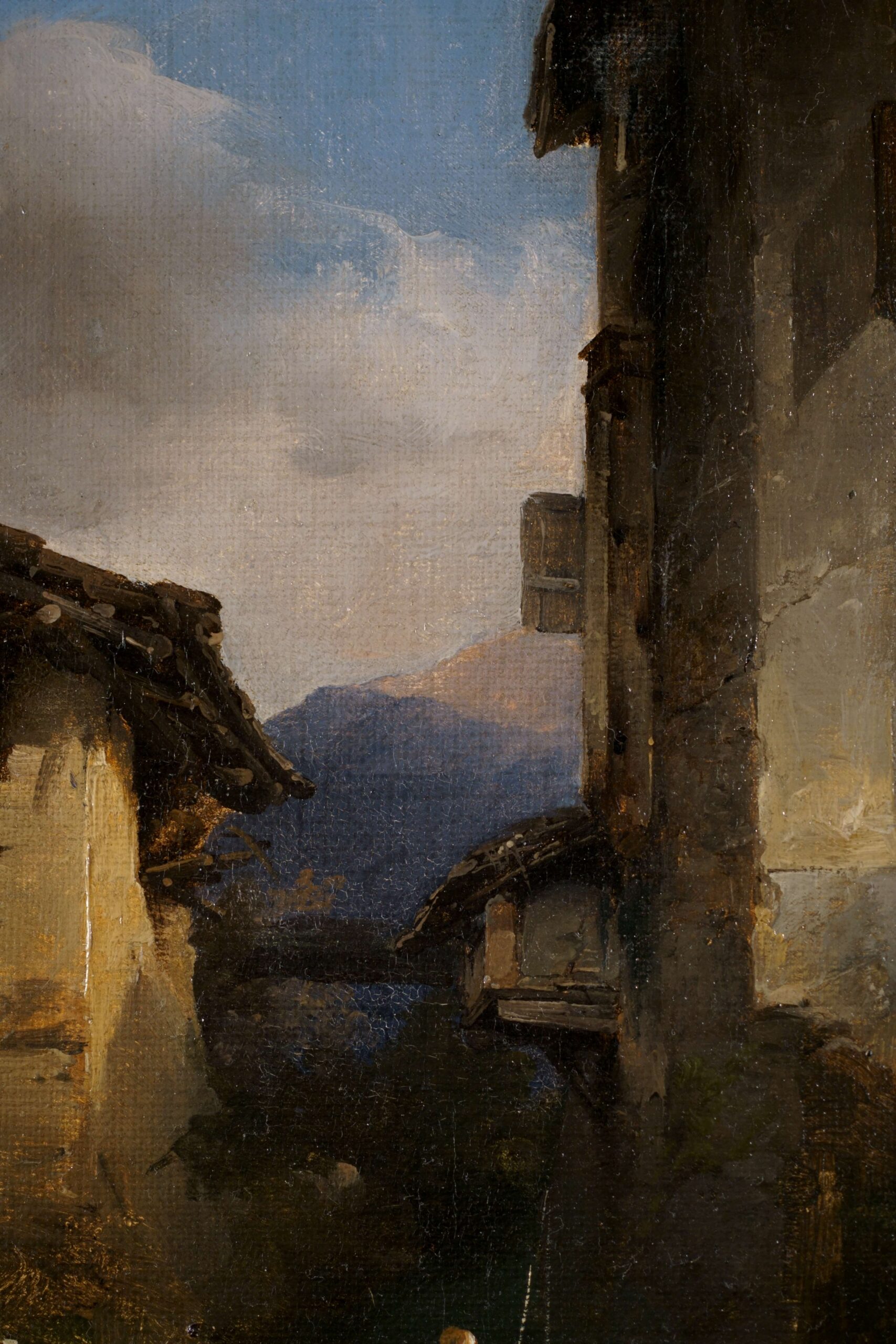
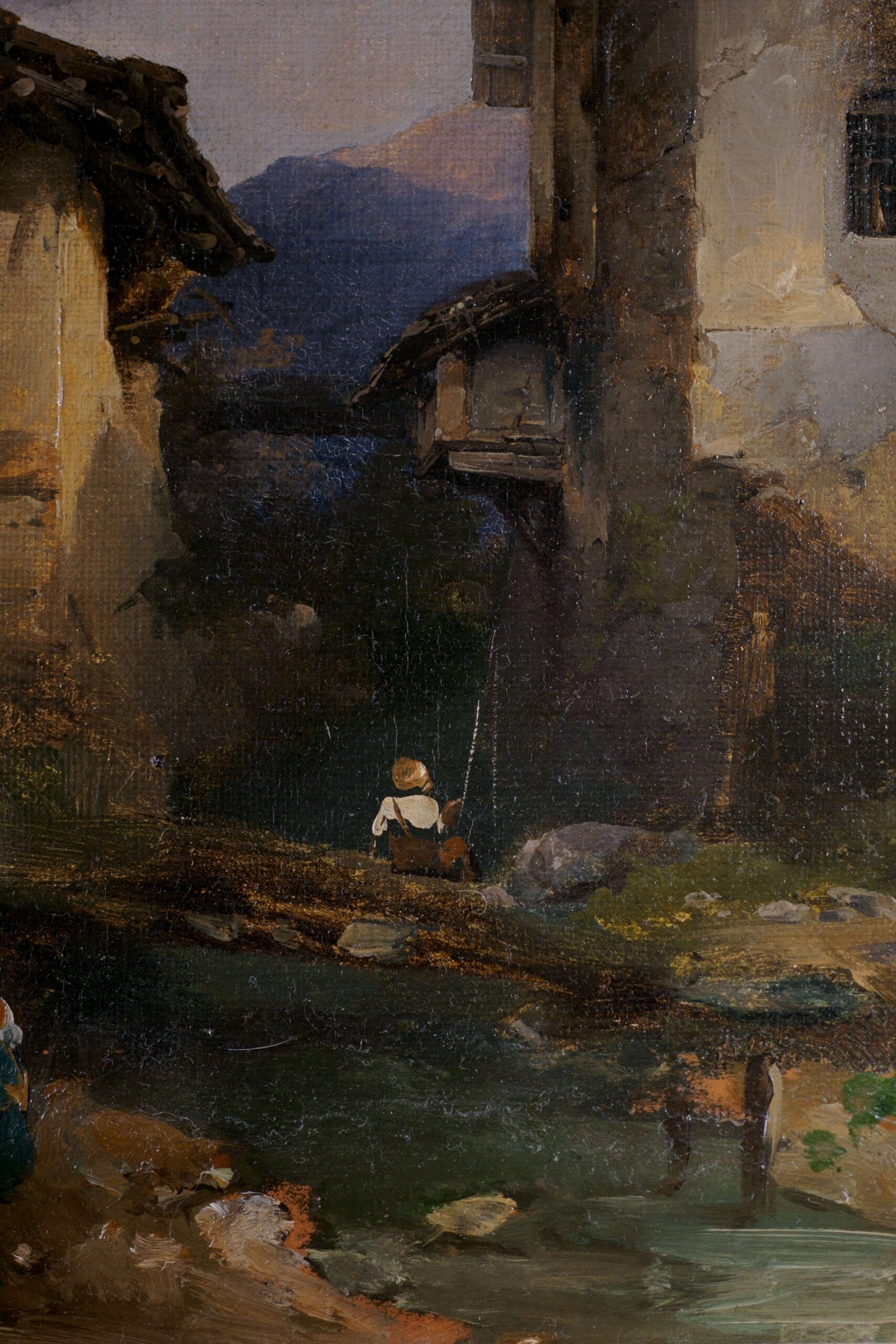
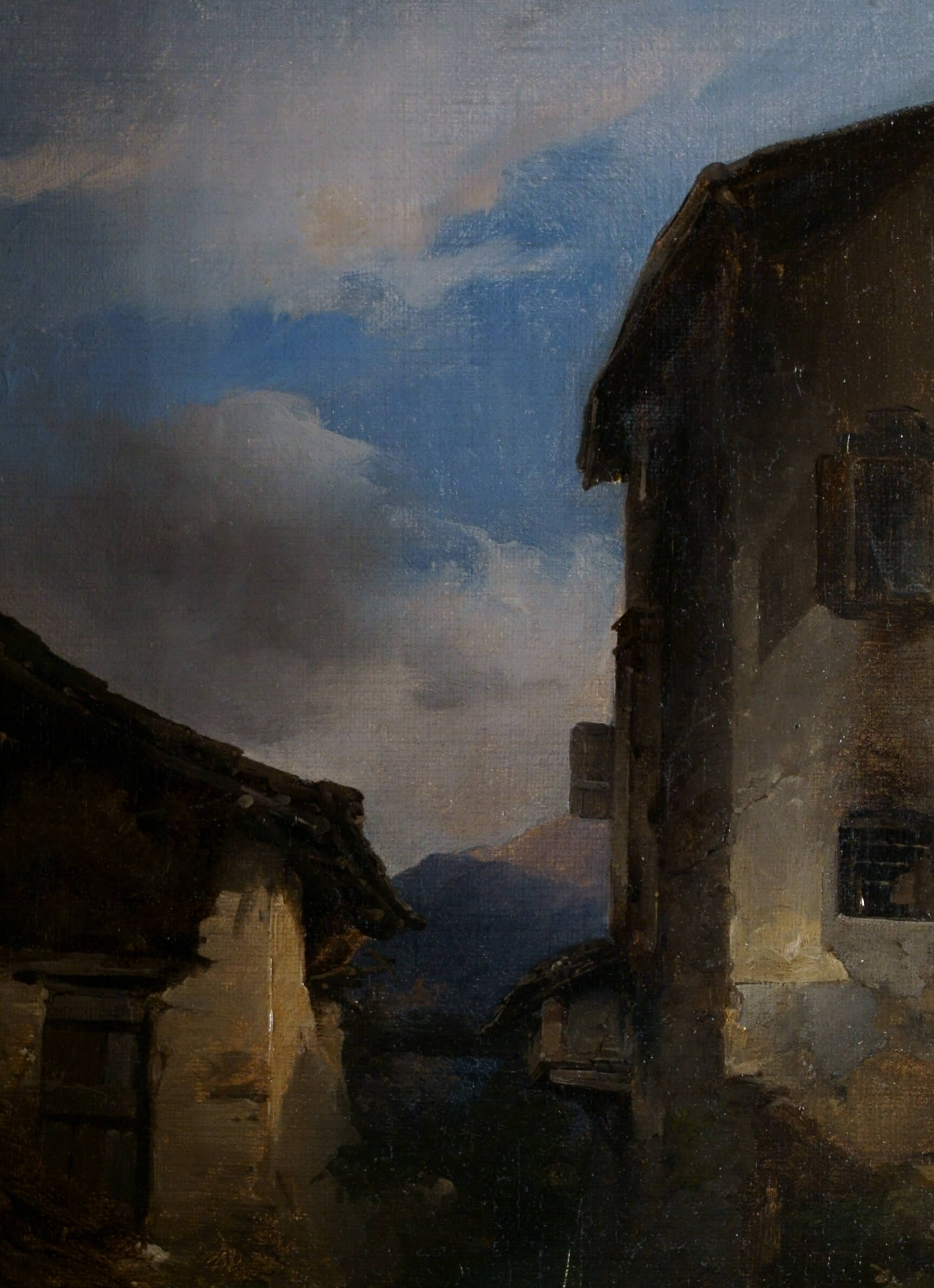
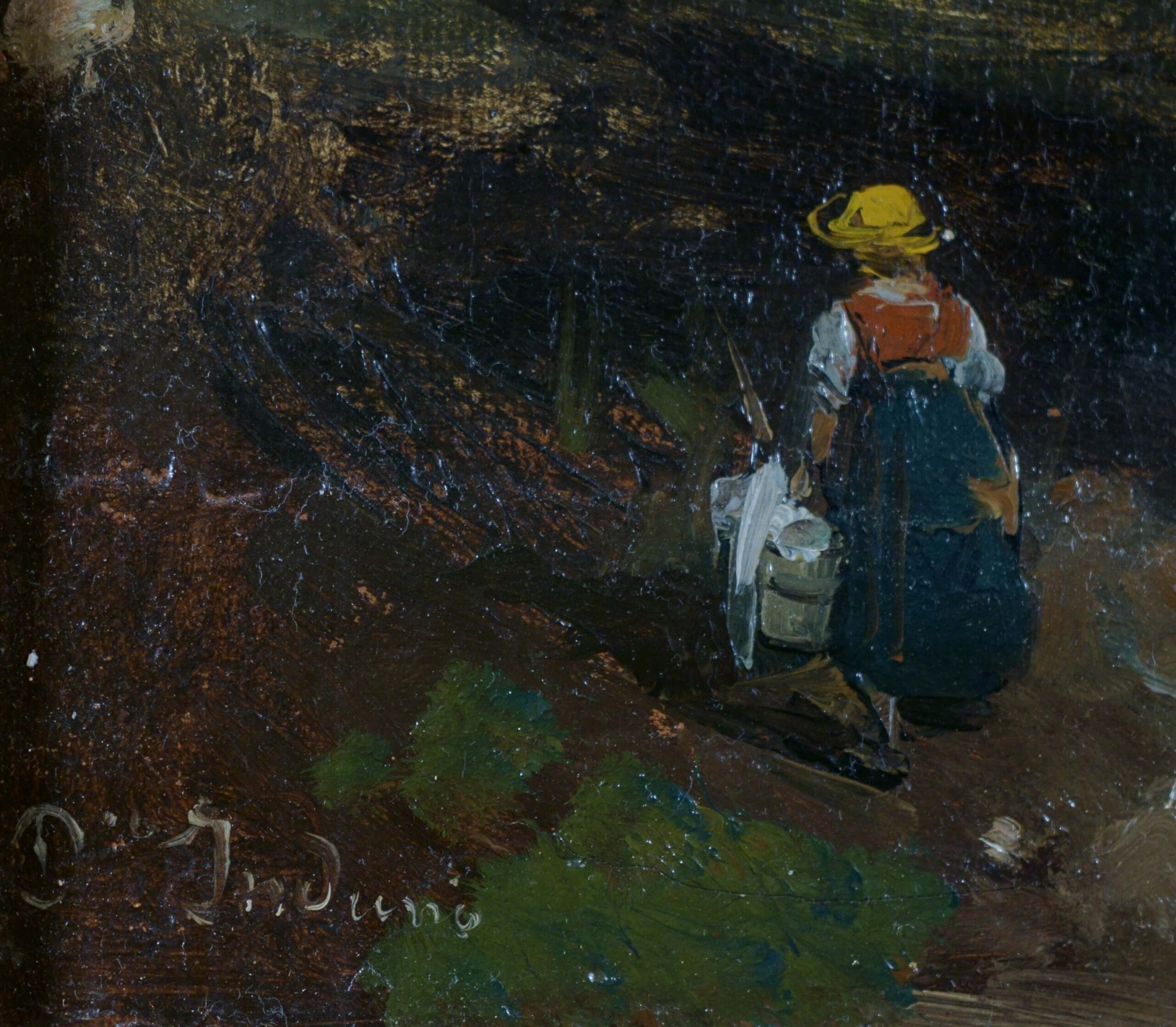
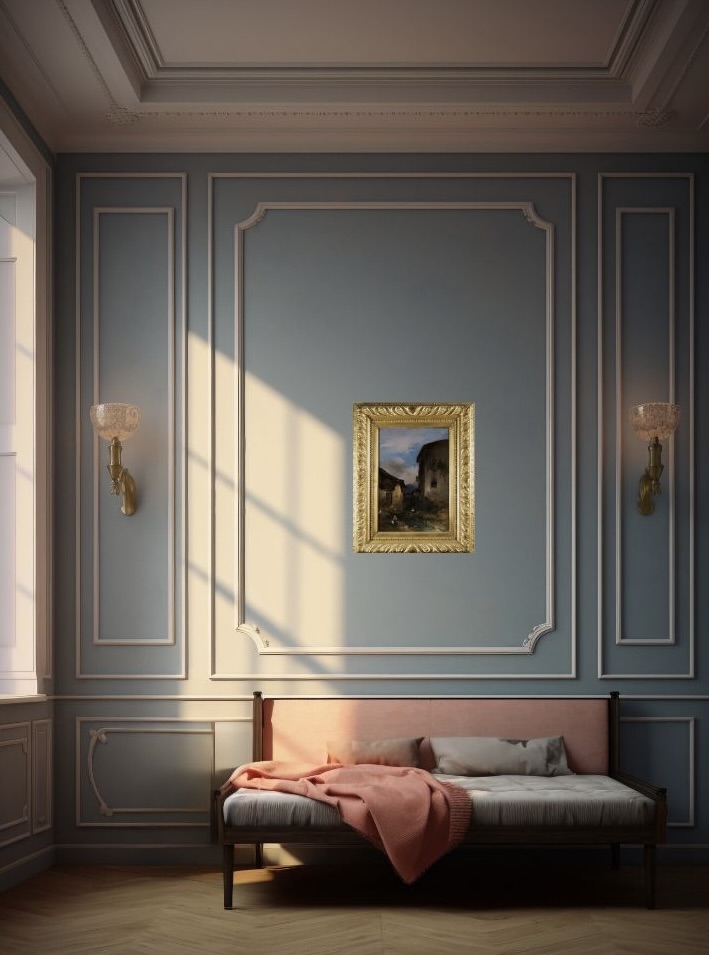
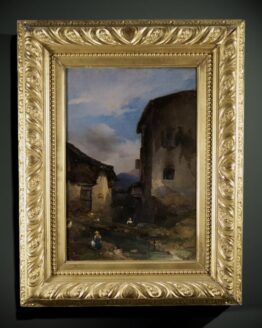
Domenico Induno (Milan, 1815–1890) “Swiss Landscape with Figures,” oil on canvas, signed lower left D. Induno. Provenance: Juan and Felix Bernasconi Collection, Villa Argentina in Mendrisio (Switzerland)
Domenico Induno (Milan 1815, Milan 1878) trained in the 1830s under the guidance of Pompeo Marchesi and Francesco Hayez. His painting, initially focused on biblical and historical subjects under Hayez’s influence, shifted in subsequent years toward genre themes to meet the demands of a Milanese clientele that was aristocratic, cultured, and liberal. To escape Austrian repression during the revolts of 1848, Induno settled in Switzerland, in the canton of Ticino; there he came into contact with the wealthy Bernasconi family, for whom he painted portraits. From there, he returned to Italy, first to Florence and then to Milan. Contemporary critics increasingly appreciated the genre painting introduced by Domenico, which consisted of national and popular themes depicting the humble and the marginalized. In 1854, he was appointed an artistic member of the Brera Academy. His paintings were a great success with both the public and critics. In 1859, he reached the peak of his career with “Al cader delle Foglie.” In 1863, he became an academic advisor. In 1873, he won the gold medal at the Vienna World’s Fair, and in 1878, at the Paris Exposition, he was awarded the Legion of Honor. He died in Milan that same year.
The Bernasconi Collection was founded by Juan and Félix, entrepreneurs from Ticino and sons of Giovanni, a craftsman from Mendrisio who emigrated to Argentina and made his fortune in the leather trade. The two brothers, who were often in Milan on business, loved to frequent the city’s artistic circles. As great lovers of painting, they frequented the studios of the most renowned artists and purchased works directly from them. Between the late 19th and early 20th centuries, the two brothers assembled the most important collection of late 19th-century Italian painting, known as the “Bernasconi Collection,” which housed nearly four thousand paintings in the “Villa Argentina,” built by their father in Mendrisio. The collection was dominated by Lombard artists, including Pompeo Mariani, Mosè Bianchi, the Induno brothers, and Luigi Rossi. The treasures of the collection—for which no inventory or documentation exists—were made public when a branch of the Bernasconi heirs decided to sell a substantial portion of it at auction, entrusting the sale to Christie’s in London in 1987.
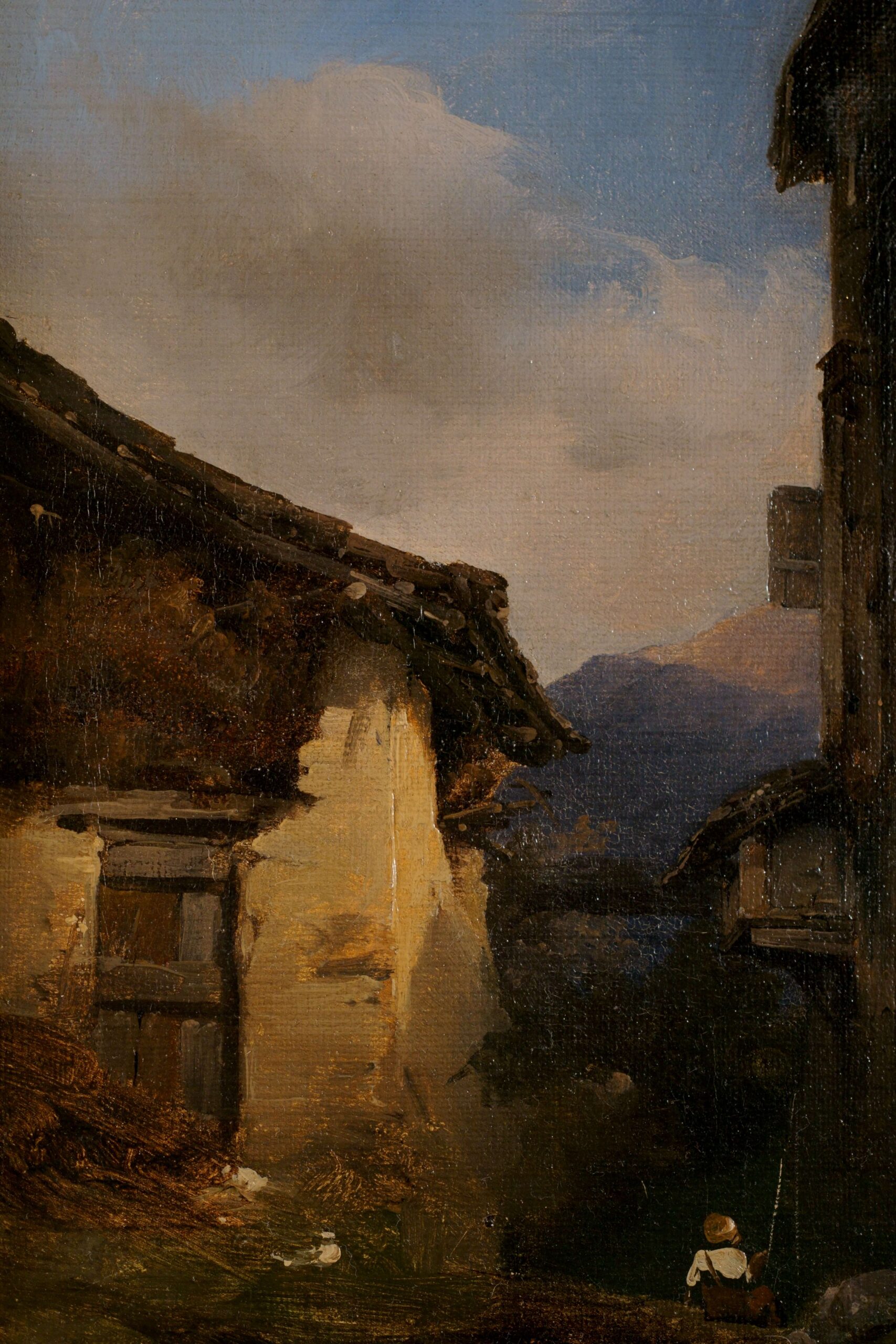
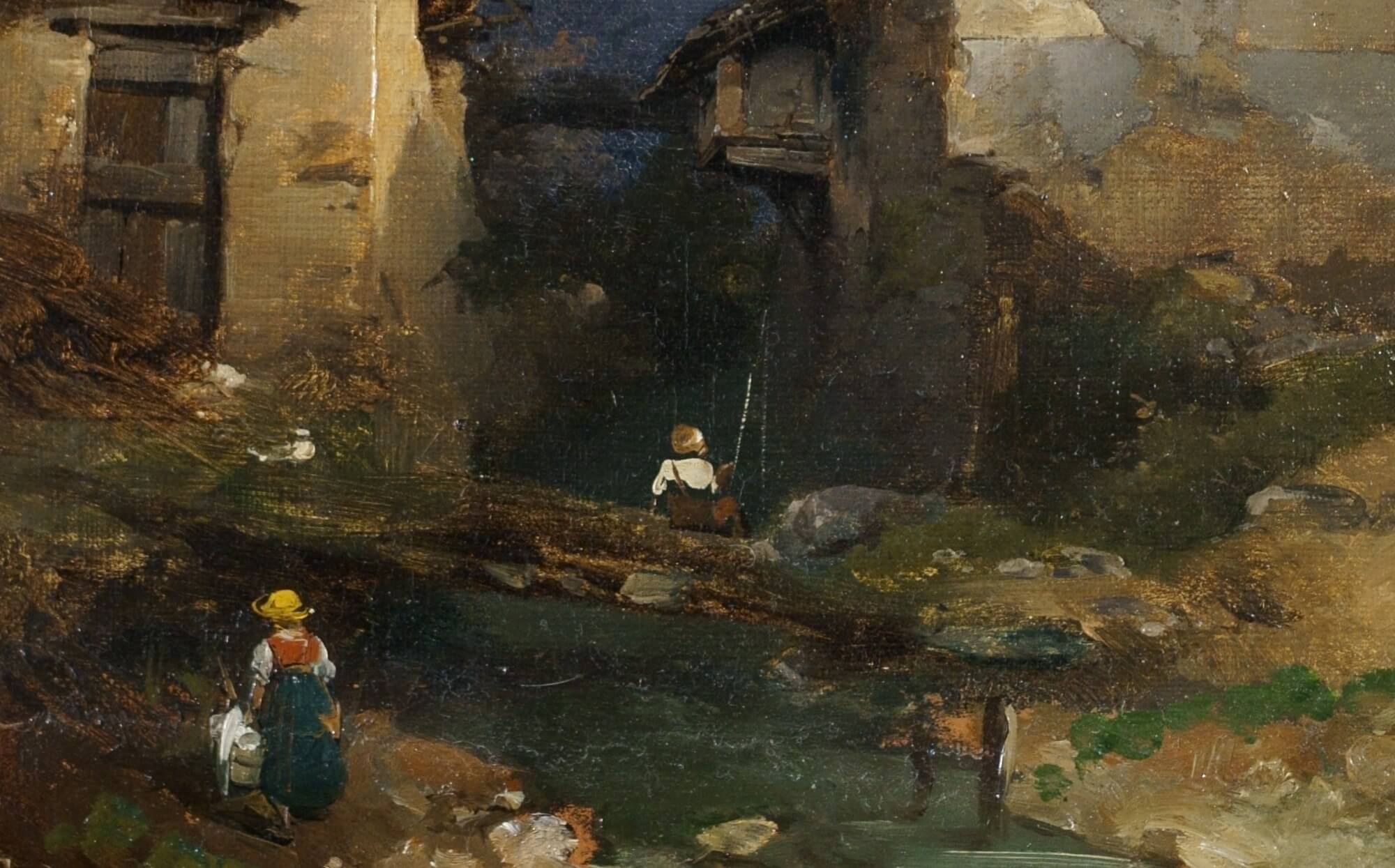
In this painting, the artist focuses on a corner between two old stone houses; in the background, a mountain and a glimpse of turquoise sky bathed in light. At the bottom, a washerwoman walks along the road leading to the village, carrying a basket of laundry under her arm, while a boy sits on a bridge fishing. A scene of everyday life, a landscape very similar to the Alpine villages straddling the border between Lombardy and Switzerland. The painter, who spent a great deal of time in the Swiss Alps, took the time to paint this scene, captivated by the light of the place—a marvelous light that brings the entire painting to life. A very similar landscape can be admired in the painting “The Village Fire,” housed at the Gallery of Modern Art in Milan.
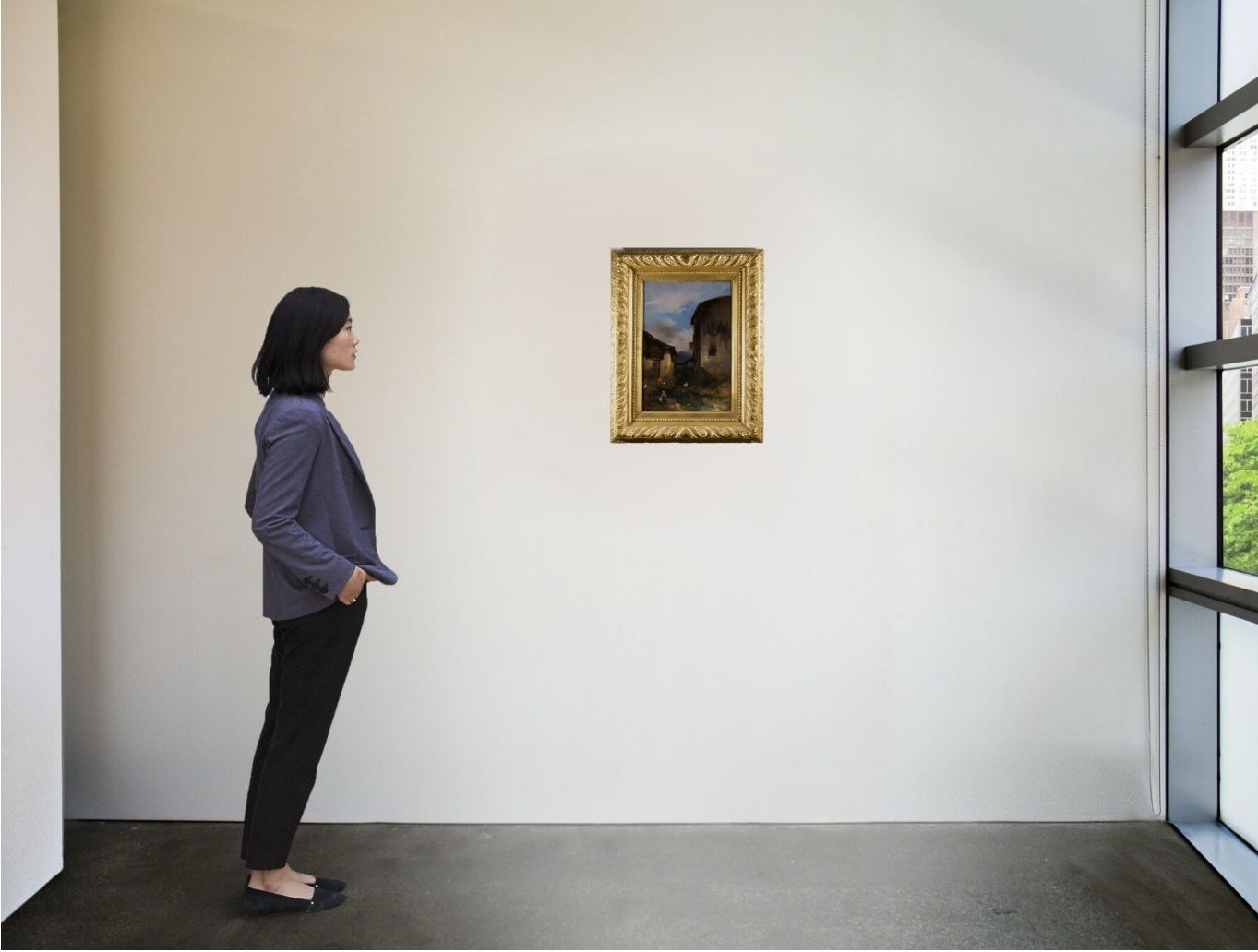
The painting is on a single canvas and is in excellent condition. It is set in a magnificent carved and gilded wooden frame dating from the mid-19th century.
The painting comes directly from the collection of Juan and Felix Bernasconi of Villa Argentina.
Dimensions:
frame 59 x 46 cm
canvas 43,5 x 30.5 cm